Tourrettes-sur-Loup, France
Some wines need time. None of them need forever.
“If you read a book about lovemaking, it’s not the same.”
Jacques-Yves Cousteau, Becoming Cousteau
Our accidental Grace Kelly route continues.
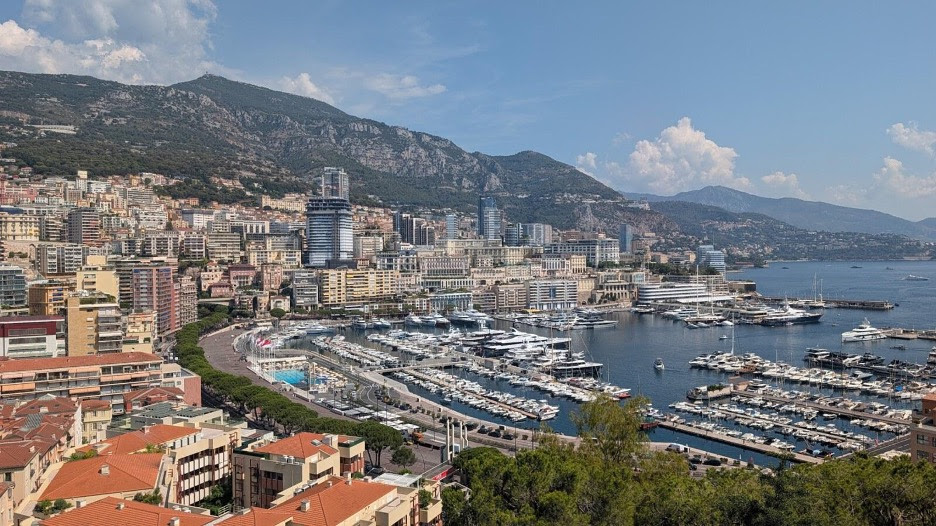
This time, Monaco.
The route had never been part of the plan. From our base in Tourrettes-sur-Loup, we began making one-hour trips across the Riviera.
Antibes. Nice. Saint-Paul-de-Vence. Cannes.
At each stop, Grace Kelly’s name seemed to surface again.
For my father-in-law, it was like catching a familiar scent and not immediately remembering where he knew it from.
He had grown up hearing about Grace Kelly. He remembered the way people spoke of her beauty, as though seeing her on a screen or in a magazine had been an event in itself.
He is a serious reader and a history fanatic. At night, he would read about the town we planned to visit the following day.
Then, as we walked through it, he would tell us what he had found.
Grace Kelly kept reappearing in those stories.
Cannes. A prince. Monaco.
Grace Kelly was attending the Cannes Film Festival in May 1955 when Paris Match arranged for her to meet Prince Rainier. The meeting took place at the palace in Monaco.
Less than a year later, they were married.
It had everything a postwar fairy tale required: an American movie star, a Mediterranean prince, a palace above the sea, and photographers ready to turn chance into destiny.
He had read the story the night before.
Now we were walking through it.
Grace Kelly supplied the history.
Formula 1 supplied the map.
I recognized Casino Square, the tunnel, the harbor, and the Swimming Pool section before I had ever walked them.
With limited time and the August heat at full strength, we decided to see Monaco by bus.
At €2 a ride, it was my best investment in Monaco.
We took two buses around the city. Both were air-conditioned and comfortable, with windows large enough to see everything without roasting on the pavements.
The buses attracted no photographers.
The parked Ferraris did.
Tourists moved in flocks from one luxury car to another, photographing each as though it were another monument.
The yachts required wider camera angles.
Then I entered a bottle shop.
I recognized enough of the labels.
I did not recognize the prices.
Perhaps I should have. Residential property in Monaco now averages approximately €5,350 per square foot.
At those rates, even the bottles must pay rent.
Our family has long been fascinated by Jacques Cousteau, not only because of what he discovered, but because he knew how to share the adventure.
So the Oceanographic Museum was a must.
Our son had his own reason. Aquariums had already amazed him in Paris and Malta.
Monaco made three.
The museum also offered air conditioning, a formidable attraction in August.
Prince Rainier appointed Cousteau director of the museum in 1957. He stayed 31 years.
An interviewer once asked what diving could teach him that books and museums could not.
His answer was outrageous coming from a museum director.
It was also true.
Cousteau helped develop modern scuba equipment, transformed the Calypso into a floating laboratory, and used film to take millions of people beneath the surface.
Distance Is Measured in Unanswered Messages
While we drove back from Monaco, the first reports from Colombia began to arrive.
Thousands of kilometers away, a magnitude 7.4 earthquake had struck.
For readers who remember the 1989 Loma Prieta earthquake that shook the San Francisco Bay Area, it registered 6.9.
Manizales, the city where I was raised and where my parents and siblings still live, had been badly shaken.
For a while, communication was difficult. The electricity came and went. Internet access was limited. What reached me first were the worst photographs and videos circulating online.
Anyone who has been far from home during an emergency knows the feeling.
Distance is no longer measured in kilometers.
It is measured in unanswered messages.
Eventually, the messages came.
My parents and siblings were safe.
Then came the stories from friends and extended family. Relief did not erase what had happened. It only made room to understand it.
Preliminary estimates put the economic losses at about $9.6 billion, a figure approaching Monaco’s entire annual GDP.
Once our immediate circle was safe, objects were allowed to matter again.
Books thrown from shelves. Paintings. My mother’s ceramics. Cracks across the paint on the walls.
And, of course, the wine.
Every time I went home, I brought a few bottles. There was no inventory system or grand collecting strategy. I wanted to forget about them for a while and slowly build a small cellar.
Each bottle assumed there would be another trip. Another lunch. Another evening around the table.
Then we start making excuses.
A better dinner. The right people. A birthday. A night when nobody is tired, late, or arguing.
Patience is part of wine. Some bottles need years.
But there is a difference between allowing wine to mature and waiting for life to become perfect.
It won’t.
The Bottle That Never Made It to Paris
Back in Tourrettes-sur-Loup, another bottle was waiting.
I have a test for wines I buy at wineries.
I open them somewhere else.
A beautiful vineyard, a cool cellar, and an enthusiastic winemaker are powerful seasonings. I want to know what remains when the scenery is gone.
Clos Sainte Magdeleine Bel-Arme 2024 was supposed to face that test in Paris.
It never made it.
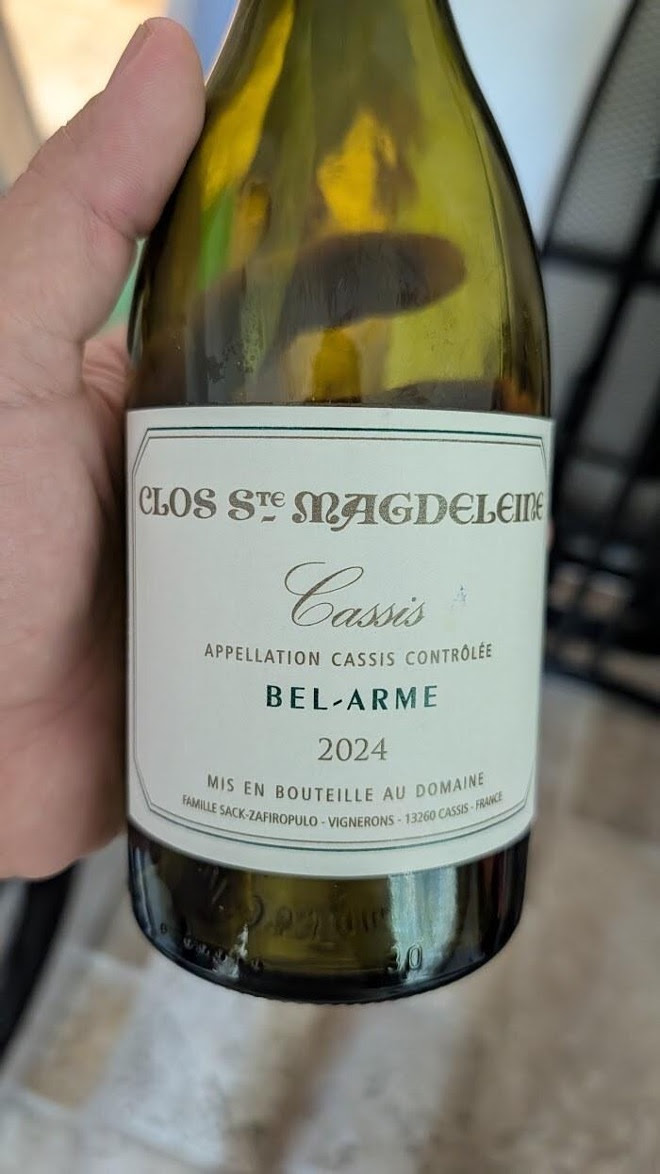
It is a white Cassis wine from old vines rooted in limestone terraces beneath Cap Canaille.
From the vineyard, the land falls through pines and pale rock into the Mediterranean.
Even its vines had spent their lives looking at the sea.
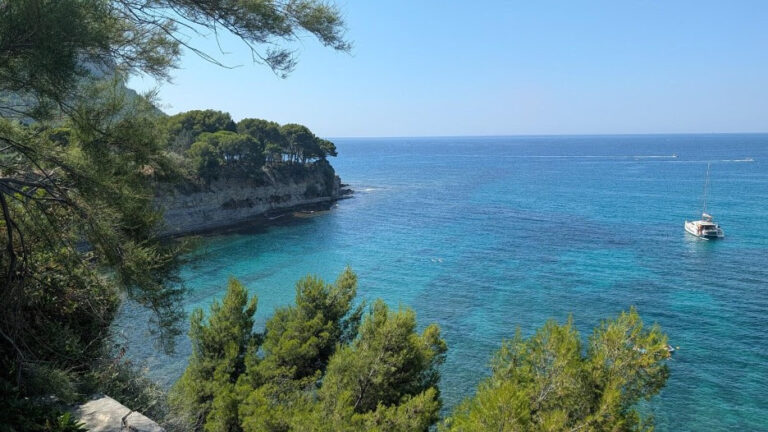
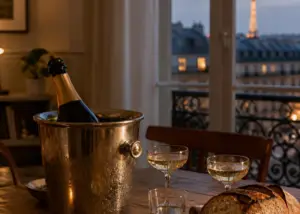
That evening, I opened it.
In the glass, it was very fresh, with white flowers on the nose, lively acidity, and a sea-spray salinity.
The scenery was gone, but the wine still carried the sea.
I did not open it because everything was normal.
I opened it because the people I loved were still there.
Cousteau had given me the answer before I knew the question.
A museum can teach us about the ocean, but it cannot replace the sea.
A cellar can teach us about wine, but it cannot replace the table.
Eventually, we have to go and see for ourselves.
Eventually, we have to pull the cork.
The bottle was never the occasion.
Being alive was.
Diego Samper
Wine Explorer