
A Report From Wine Explorer Diego Samper
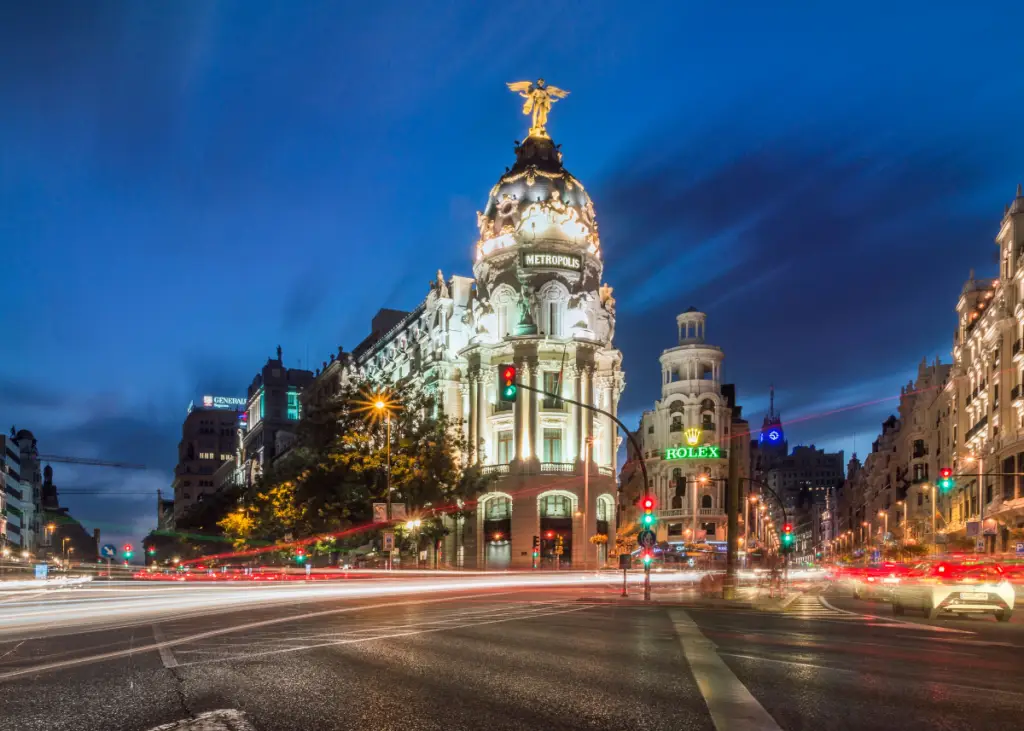
Madrid, Spain
We came to Madrid for family. Since we live far away, it matters to us that our son actually knows his family, not just recognizes their faces from a screen. His cousins were going to be here, they’re all around the same age, and that felt like reason enough to come.
I also have some of my oldest friends here. I met them while studying abroad, when I lived in the Netherlands. Somewhere in that period, I made the kind of friends who, fifteen years later, are still there.
Madrid is familiar to me now. I know Cuatro Caminos. I know Castellana. I know where I want jamón, where I want croquetas, and which friends I want to see first.
My mother has her own explanation for why Madrid feels comfortable to us. Somewhere back in the family tree, we are Spanish. So, according to her, of course it feels like home. Mothers are allowed these theories.
I’m less convinced it works that way. But familiarity does have a way of making us feel certain about things.
You can watch someone on Instagram, hear them on the radio, see them on TV, and after a while they begin to feel familiar. You know their voice, their mannerisms, maybe even what they order for dinner. But recognition is not knowing. There is still a table missing, a conversation, the awkward pause, the part that never makes it onto a screen, microphone, or camera.
Wine has its own version of this. Drink enough of it and eventually you start saying things like: I’m a Bordeaux drinker. I don’t like syrah. I only drink Burgundy. Natural wine isn’t really my thing.
I do it too. Taste has seasons. Sometimes I go deep into French wine. Sometimes I become obsessed with one region, buy six or ten bottles, drink through them, move on, and return months later wondering why I stopped.
There is nothing wrong with knowing what you like.
The trouble starts when preference becomes a rule.
Once that happens, you stop giving other things much of a chance. And wine, which should be one of life’s great excuses to remain curious, starts getting predictable.
Bottle by Bottle, You Build a Map
We’re coming up on almost 30 collections now, over nearly seven years. A special recognition is due to those of you who have been with us since the beginning. You have opened a lot of bottles with us, and that is part of the fun.
One collection might put a mountain wine from Argentina on your table. Another might take you through France. Then a bottle from Priorat shows up.
Little by little, bottle by bottle, you build your own map of the wine world.
Not from a textbook. From drinking it.
You begin to notice how the same grape changes from one place to another. A region that was once just a name on a label becomes somewhere you want to visit. A style you had written off suddenly makes sense because the right producer showed you another version of it.
That is what I want the club to keep doing: making discovery fun while giving you enough reference points to understand your own taste a little better.
After almost 30 collections, finding good wine is not the difficult part. There is a lot of good wine in the world. The difficult part is making sure the next six bottles still add something to that map.
It would be easy to settle into a formula. Bordeaux here. Burgundy there. A familiar grape. A region that needs very little explanation. Nobody would complain, and that is precisely why you have to be careful.
Good can become safe without you noticing.
This is one reason I’m so excited about the next collection. I’ve been chasing wines from Catalonia for years. A trip around Girona first pushed me in that direction, and since then, whenever I see a Catalan bottle I don’t know, I tend to try it.
I’ve also tried more than once to get some of those wines into the club. Deals came close, then something happened. The price changed. The logistics stopped making sense. The wine disappeared. There was always something.
Then I tasted the Familia Nin-Ortiz Planetes Classic from Priorat.
That was it.
It had the dark fruit and structure I expect from Priorat, along with spice and mineral character, but there was freshness too. It didn’t feel heavy or overworked. It simply made me want another glass.
And maybe that is the best test: not whether a wine fits the story you already have in your head, but whether it gives you a reason to redraw it.
That is what I want these collections to do. Not shock you for the sake of novelty. Not chase whatever region happens to be fashionable. Not send you something strange just so we can say it is different. The wine still has to be well-made. It still has to deserve its place in the box.
But every now and then, it should make you question one of your own rules. Maybe you thought you did not like a grape. Maybe you thought you knew a region. Maybe a certain style was not for you. Then the right bottle shows up and complicates the picture.
That is what keeps wine interesting.
The Long Way South
Five wines from France, one from Catalonia, and six bottles chosen to keep your palate moving rather than simply confirming what you already know.
Billing begins October 19th, with shipping starting a week afterward.
If you’re already a member, thank you. This collection is coming your way.
If you have been with us from the beginning, an extra thank you. Almost seven years and nearly 30 collections later, you are a big part of the reason we still refuse to phone this in.
If your subscription is on hold, this is a very good collection to come back for. And if you’ve been reading these letters from the sidelines but have never joined us, there is still time.
We have a limited number of spots before we close the October collection. Simply click here to reserve your upcoming collection.
Once these wines are gone, we move on to the next search.
After almost 30 collections, I’m not worried about running out of good wine. I’m more worried about getting too comfortable with what I already know.
Madrid reminds me of that too. You come back thinking you know the place. Then somebody puts a plate in front of you, pours a glass, and shows you there was still another version of it waiting.
Diego Samper
Wine Explorer