
A Report From Wine Explorer Diego Samper
Paris, France
I have a travel jacket I bought in Lithuania more than ten years ago.
It was one of those rare good purchases. Good fabric. Good pockets. Built for airports, train stations, bad weather, and the small chaos of moving through the world.
It is the kind of jacket that leaves the house with a passport.
Every now and then, I put it on and find something in one of the pockets.
- A boarding pass
- A receipt
- A museum ticket
If I’m lucky, a small note from another country. Currency from a place I had almost forgotten.
It is not worth much. Not in the normal sense.
But for a second, it takes me back.
This week, the wine world had its own version of that moment.
Only instead of an old boarding pass, it was a magnum of Château Lafite Rothschild 1870. And instead of a jacket pocket, it came from the cellars of Glamis Castle in Scotland.
At a Sotheby’s auction in New York:
- One magnum sold for $200,000
- Another sold for $106,250
Together, two bottles brought in more than $300,000.
One of them did not even have a paper label.
No reconditioning. No recorking.
Just wax. Time. And a story.
Sotheby’s notes that cellar books recorded the purchase of 48 magnums of Lafite 1870 in 1878.
They sat there, almost impossibly, through:
- Two world wars
- The rise of Napa
- The internet
- Smartphones
- Whatever we are calling this current age of distraction
Then, more than 150 years after the wine was made, collectors fought over them in New York.
On the surface, it looks absurd.
One bottle. $200,000.
And yet, I understand the pull.
Maybe wine’s deepest appeal is not only alcohol.
It is:
- Time
- Memory
- Scarcity
- The feeling that something fragile can survive
Auction houses love a phrase like “immortal wines.” It sells the dream that a bottle can outlive us.
In one sense, this Lafite did. It survived the people who grew it, bought it, stored it, sold it, and probably most of the people who once dreamed of drinking it.
But whether the wine itself is still alive?
That cannot be known until someone pulls the cork.
The Paradox of Great Bottles
The more valuable the bottle becomes, the less likely anyone is to open it.
I do not say this with contempt. Quite the opposite.
If someone spends $200,000 on a bottle of wine, and that bottle brings them wonder, curiosity, or joy, I celebrate it.
There are worse things to do with money than chase a mystery that has been sleeping in glass since 1870.
My only hope is that whoever bought it eventually opens it.
Because wine keeps its final secret until the cork comes out.
- Was it still alive?
- Did it taste like old Bordeaux?
- Dust and memory?
- Something beyond words?
That is the part I want to know.
Old wines at auction come with a gamble.
- The bottle may be authentic
- The vintage may be correct
- The provenance may be strong
But whether it still tastes beautiful is another question entirely.
Someone paid $200,000 not for certainty, but for the chance to open a door that has been closed for 150 years.
The Difference That Matters
At least in our wine club, we can still stand behind what we send.
And that difference matters.
Most of us are not buying immortal wines.
We are buying bottles for:
- Dinner
- Sunday lunch
- Birthdays
- Friends who drop by
- The night when the roast comes out right
- When the baby finally sleeps
- When the world feels a little lighter
That is where cellaring becomes interesting.
Not as a millionaire’s game.
As a small act of faith.
A Better Way to Cellar
One of our members, Thomas, has the right instinct.
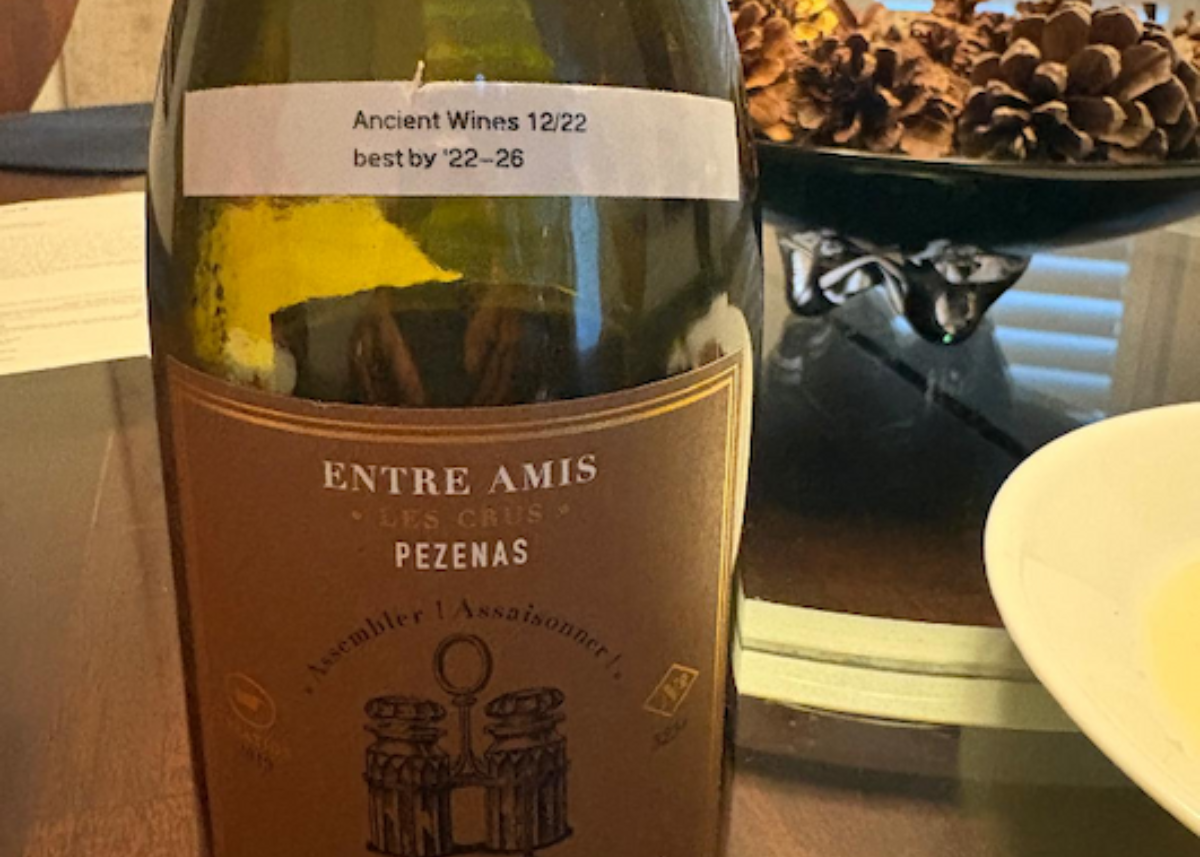
He keeps bottles from the club and drinks through them slowly. He also labels some of them with small tags, noting:
- The collection they came from
- When he thinks they will be best
Years later, it is no longer just a bottle.
It becomes:
- The bottle from that shipment
- That season
- That story
In its own way, that tag is a cellar record.
Not so different from the records at Glamis Castle.
He wrote to me recently:
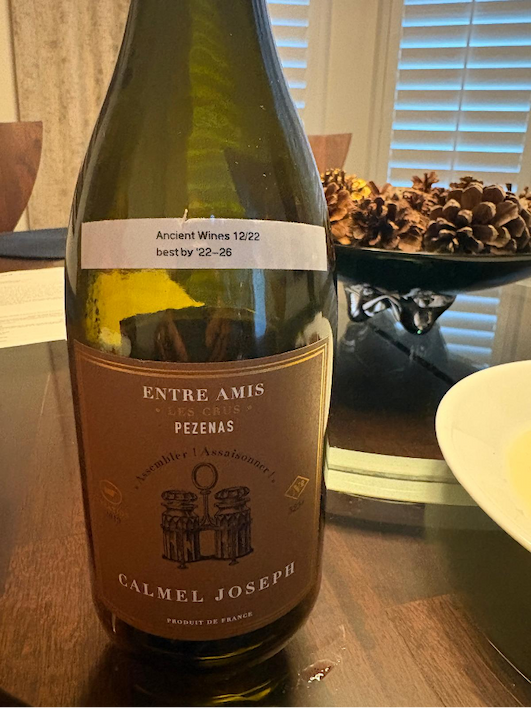
“So tonight, this came out of our cellar. Val, who lives in SLO, is here to share it with us. OMG another great version of a GSM. Wow there are surprises in our wine fridge. Hope all is well.”
That, to me, is the whole point.
A bottle, opened and shared.
When to Open a Bottle
Every wine drinker eventually asks:
“Would this have been even better if I had waited?”
The honest answer:
Maybe.
Maybe not.
Wine does not age like a machine following instructions.
- Some bottles improve
- Some fade
- Some simply get older
Corks fail. Heat damages wine. Fruit disappears.
That is why you often hear:
It is better to open a bottle a little early than one day too late.
How to Store Wine Properly
Good cellaring is mostly unromantic.
You do not need a castle.
You need three things:
- Cool
- Dark
- Stable
The ideal cellar is around 55°F (13°C), but the practical version is simple:
- A quiet closet is better than a sunny kitchen
- A box under the stairs is better than a display rack
- A wine fridge is better still for long-term storage
Basic rules:
- Avoid heat
- Avoid sunlight
- Avoid temperature swings
- Store corked bottles on their side
- Screw caps can be stored upright or sideways
Above all:
Do not turn your cellar into a museum.
A cellar should be a memory bank.
- Some bottles for now
- Some for later
- A few you forget, long enough to surprise you
Why Magnums Matter
Most of us are not drinking Lafite 1870.
But we understand the appeal: longevity, story, scarcity.
Those same qualities exist in quieter ways.
And since this story began with magnums, it is worth saying:
We have a few magnums available right now.
Not immortal wines. Not $200,000 relics.
Just generous bottles from producers we believe in, made for tables where people stay longer than planned.
Magnums have a unique charm:
- They change the mood of a dinner
- They make a table feel more festive
- They slow people down
- They invite one more glass, one more story
If you have not bought a magnum before, this is a good time to try one.
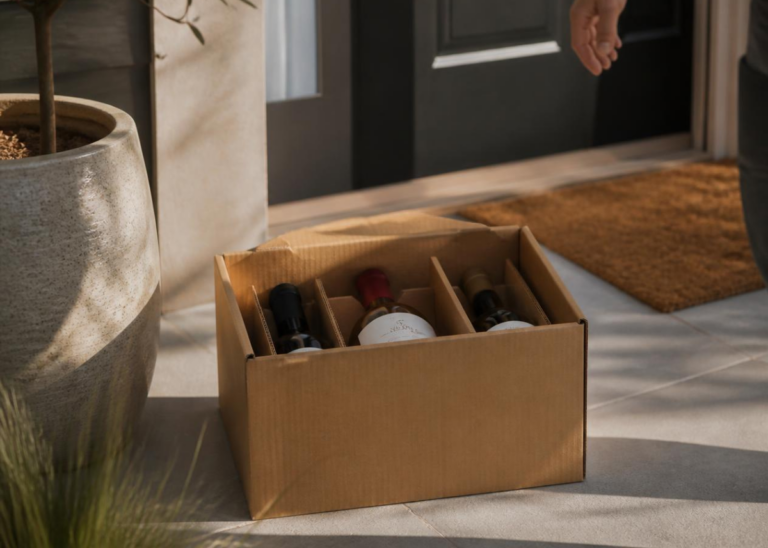
A Note on Summer Shipping
Summer is coming, and heat changes everything.
We have to monitor:
- Shipping routes
- Weather windows
- Warehouse timing
- Delivery conditions
Sometimes we ship. Sometimes we wait.
That is why this is a good moment to stock up.
- A few bottles for the fridge
- A few reds for the closet
- A magnum or two for special dinners
Not every wine needs ten years.
But there is real pleasure in knowing something good is waiting for you.
Final Thought
Drink some now.
Hide one or two for later.
Give your future self something to find.
Not a Scottish castle.
Not an auction room.
Just your house. Your table. Your people.
Which, in the end, is where wine belongs.
Diego Samper
Wine Explorer
P.S. Tell me what you’re drinking. Send me photos of the bottles you open, the bottles you’re saving, or the surprises you find in your own wine fridge: explorers@bonnerprivatewines.