
A Report From Wine Explorer Diego Samper
Paris, France
There’s a quote from Michel Rolland that has stayed with me:
“Fortunately, before coming for the first time I had not tried the Argentine wines that were made here, because if I had tried them I wouldn’t have taken the plane.”
It’s funny. Sharp. A little brutal.
But the important part is not the joke.
The important part is that he came back.
Born in 1947 in Libourne, in the heart of Bordeaux, Rolland grew up among Merlot vines and trained formally in oenology before becoming one of the most influential consulting winemakers of the last half century. In the 1980s, he became one of the first true flying winemakers, advising estates across Bordeaux, Napa Valley, Chile, Italy, South Africa, India, and Argentina.
For nearly 38 harvests, he helped shape Argentina’s wine story.
He will be missed this harvest.
The Beginning in Argentina
When he first arrived in 1988, it was at the invitation of Arnaldo Etchart, who brought him to Cafayate, Salta, to consult on Yacochuya. That was his first Argentine project.
The north came first.
Before Mendoza’s scale. Before international acclaim. Before Malbec became shorthand for the country.
When Rolland came, Argentina had sunlight, fruit, and old vineyards. What it lacked was consistency and technical confidence.
He helped change that.
Mendoza and Conviction
In Mendoza, projects like Val de Flores and Clos de los Siete were not simply statements about potential. They were proof of conviction. He put his own money, his own name, and his reputation behind the belief that Argentina could stand shoulder to shoulder with the world’s serious wine regions.
I still remember the first wine of his that I tasted: Val de Flores 2012.
I was just beginning to pay attention to wine. Not just drinking it, but listening to it. It was paid for by my ex-father-in-law at the time. I remember the first sip: dark fruit, structure, and a sense of control I hadn’t encountered before.
It felt deliberate.
That is influence.
Not noise.
A wine that quietly expands your frame of reference.
The North and Identity
But if Mendoza demonstrated ambition, the north demonstrated identity.
The wines of Salta do not taste like anywhere else in the world.
The light there is not gentle. It strikes the vineyard hard. The altitude sharpens everything. Heat by day. Cold by night. The fruit stretches between extremes.
Tacuil. Yacochuya. Vineyards carved into dry riverbeds and stone.
They produce wines that are not polite.
They are precise, structured, unmistakable.
Rolland’s connection to the north mattered because he saw potential early. He recognized that raw material needed discipline.
It’s important to like or dislike a wine. Taste is personal. But before preference, there must be understanding.
You can dislike a wine and still recognize that it is well made.
That distinction strengthened Argentina.
A Lasting Influence
Influence in wine is not only in bottles. It is in the shaping of a generation.
Raúl “Yeye” Dávalos now leads at Tacuil. Matías Etchart, nephew of Arnaldo Etchart, charts his own course with Arca Yaco at Finca El Monte. They do not imitate Rolland. They do not chase his style.
But they work in a landscape he helped elevate.
They inherited a higher standard.
As a line often attributed to Aristotle puts it, “It is the mark of an educated mind to be able to entertain a thought without accepting it.”
For nearly four decades, harvest after harvest, Rolland was part of the rhythm of Argentine wine.
This year, the harvest will feel different.
But the vineyards remain.
The north remains.
The wines still refuse to taste like anywhere else.
And somewhere in that stubborn individuality remains the mark of a man who saw something worth coming back to.
Diego Samper
The Wine Explorer
P.D.
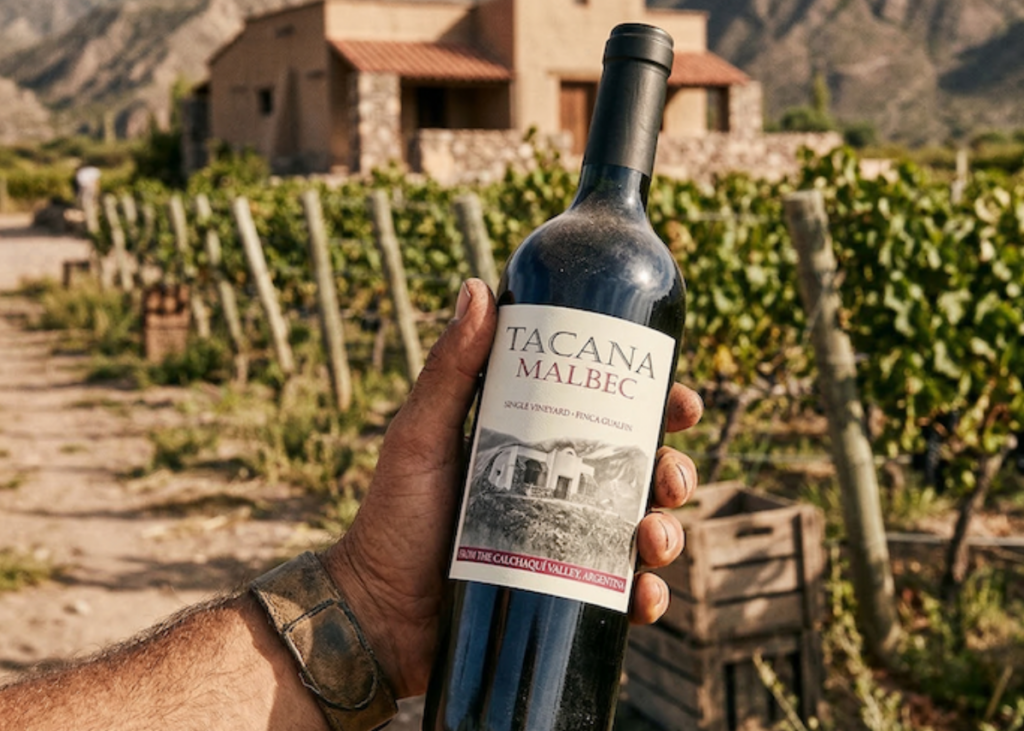
On the subject of wines that can only come from one place, the Tacana Malbec 2024 release is available in limited allocation.
Tacana comes from Finca Gualfín, 8,500 feet up in the Calchaquí Valleys, the same north that Rolland recognized early. Drought-driven, concentrated, unmistakably itself.
Eight previous vintages. Not one left over.