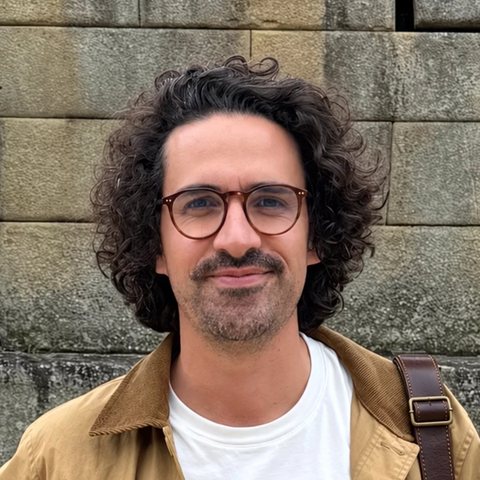

A Report From Wine Explorer Diego Samper
Paris, France
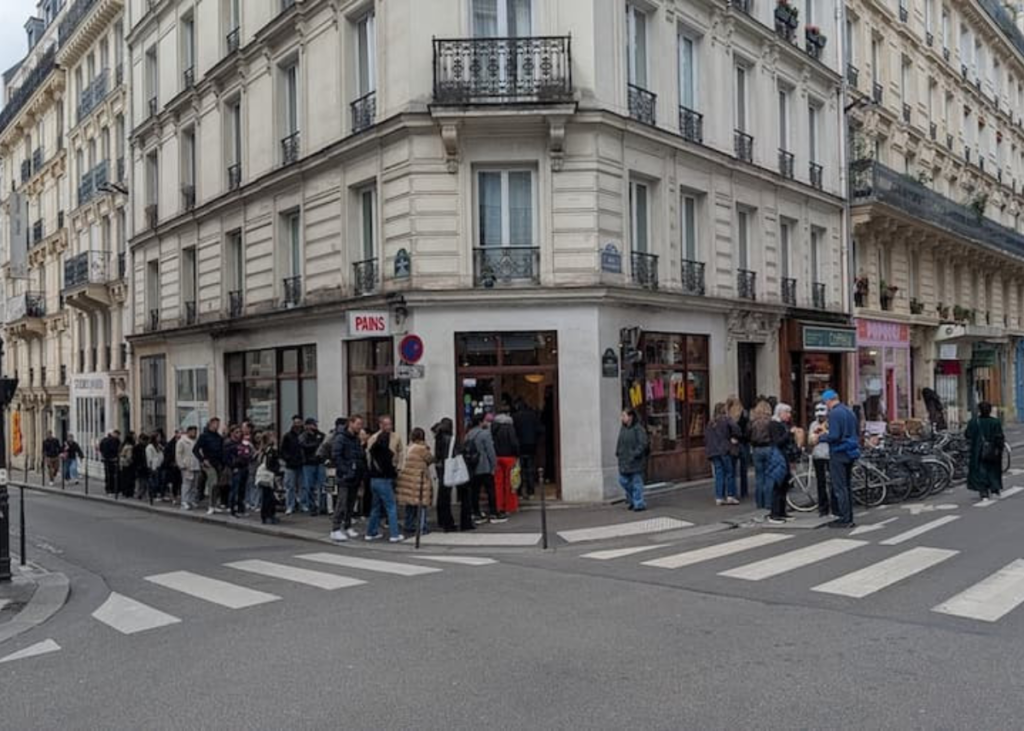
The Line Outside Mamiche
Every morning after I drop my baby at daycare, I walk through the 10th arrondissement of Paris.
Most mornings, I pass the same bakery.
There is almost always a line.
Not the old Paris café line we like to imagine, with writers in wool coats, cigarettes burning, notebooks open, and a little too much confidence at every table.
This is the new Paris line.
A pastry in one hand. A phone in the other.
Someone waiting to eat. Someone else waiting to post.
And somewhere nearby, almost always, a boyfriend crouched at the correct angle, trying to make a croissant look like destiny.
The bakery is called Mamiche, and it sits on a corner beneath a red sign that says PAINS.
In French, of course, that means breads.
But every time I see the line, my English-speaking brain reads it differently.
Pains.
As in: my nightmare.
Because I do not like lines. I especially do not like lines for food. I understand them in theory. I respect the devotion. But standing outside for a pastry, in the cold, while strangers photograph laminated dough as if it had just returned from war, is not my natural habitat.
And yet, the line is always there.
That is what makes it interesting.
The Performance and the Truth
Mamiche now exists in two worlds. In one, it is just a bakery. People make bread. People make pastries. People work hard. People eat.
In the other, it is a stage.
The pastry comes out. The phone comes up. The photo is taken. And for one second, Paris becomes what everyone hoped Paris would be.
I do not say this with contempt.
I understand it.
Food does this to us. Wine does too.
A beautiful thing appears in front of us and we want to hold it still. The golden crust. The full glass. The little table. The label. The proof that life, for one brief second, has arranged itself properly.
But because I walk past often, I also see what happens outside the photograph.
There are no proper seats, so people sit where you tie your bike.
A metal bar.
Still, they sit there, pastry in hand, phone nearby, somehow making it work.
Then there is the side door.
The kitchen.
The deliveries.
The hands behind the charm.
That is the part nobody photographs.
Not because it is ugly. Quite the opposite. It may be the most honest part of the whole thing.
The image is the pastry held up to the camera. The truth is the work behind it.
Hemingway, Paris, and Performed Taste
I have been in a Hemingway rabbit hole lately. Not just the romantic Hemingway of cafés, wine, and the Lost Generation glow. The reporter Hemingway. The young man watching Paris closely, trying to separate the artists from the people who only liked sitting near artists.
That distinction feels useful now.
Because the world is full of people performing taste.
The harder thing is to actually taste.
And maybe this matters more now because we are entering a time when machines can do many of the things we used to mistake for intelligence.
AI can read reports. It can compare prices. It can scan reviews. It can summarize regions, vintages, critic notes, sales data, shipping costs, and inventory.
It can probably tell you which bakery is trending in Paris.
But it cannot walk past the place every morning after daycare. It cannot feel the cold metal bar under the people eating outside. It cannot smell the kitchen door when it opens. It cannot taste the gap between the performance and the thing itself.
That is still human work.
And in wine, that work matters.
Wine Has Its Own Version of Theater
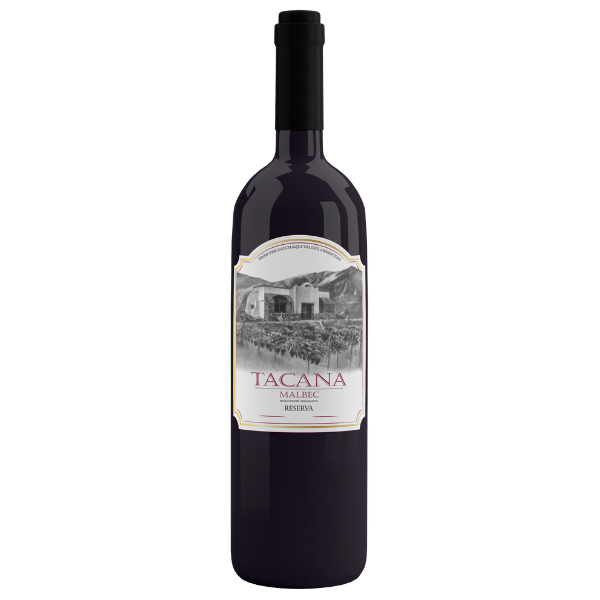
Wine has always had its own version of the café pose: the heavy bottle, the château sketch, the gold sticker, the old family name, the word “reserve,” the tasting note that sounds like it was written by someone trapped inside a spice cabinet.
Some of it is real. Some of it is theater.
The only way to know is to taste.
Not sip and nod.
Taste.
A Simple Exercise for Tasting Wine
When I taste wine, I try to come back to four simple things.
Look
Look at the wine.
Is it pale, dark, cloudy, brilliant, young, tired, heavy in the glass, light on its feet?
Smell
Fruit, earth, flowers, herbs, smoke, citrus, oak, something familiar, something strange.
You do not need perfect vocabulary.
You just need honesty.
Taste
Not just, “Do I like it?”
First ask what is happening.
Is it fresh, soft, sharp, heavy, dry, sweet, bitter?
Does it disappear quickly, or does it stay?
Does it make you want food?
Does it make you want another sip?
Think
Does the wine match its story?
Does the label promise elegance while the wine feels clumsy?
Does the tasting note promise power while the wine feels thin?
Does a humble bottle surprise you?
Does a famous name disappoint you?
Does the wine feel made, or grown?
That is when tasting stops being automatic.
What Wine Is Really About
And maybe that is the real pleasure of wine.
Not proving you know more than the person next to you.
Not performing taste.
Just slowing down enough to notice something, and then having the words to share it.
A wine can be good and still not be for you.
It can be strange at first, then open up with food.
It can disappoint you, surprise you, or make you reach for the bottle again without quite knowing why.
That is wine conversation at its best.
Not a lecture.
Not a performance.
Just people around a table trying to describe what happened in the glass.
The Part We Forget About Wine
Maybe that is part of what gets lost now.
So much of the public conversation around drinking begins with the consequence: the hangover, the excess, the bad decision, the warning label.
Fair enough.
Those things exist.
But wine, at its best, does not begin there.
It begins with discovery.
With company.
With a glass that makes the meal feel lighter, the room warmer, the conversation a little less guarded.
It begins with noticing.
Behind Every Bottle
A label can tell you useful things: where the wine comes from, the vintage, the alcohol, the importer, the official details.
But it cannot tell you everything.
Behind a cork, you might find patience, weather, stubbornness, altitude, an old vineyard, or a family that still works the land.
Or you might find a very good costume.
That is what I am looking for when I put these collections together.
Not bottles that look important.
Not labels that know how to perform.
Wines we have tasted, questioned, compared, and chosen because something real showed up in the glass.
That is why I love doing this work: finding wines from small producers, tasting them carefully, and putting these collections together for you.
Not so you can memorize more wine facts.
So you have bottles worth opening, noticing, arguing about, and sharing.
Make the Exercise Yours
So if you have one of our bottles at home, open it this weekend and try the exercise.
Look. Smell. Taste. Think.
And be honest.
It is fine if you dislike it.
That is part of tasting too.
Not every wine has to become your favorite.
Sometimes the value is in noticing why it does not work for you:
- too sharp
- too earthy
- too lean
- too powerful
- too quiet
- too different from what you expected
That is not failure.
That is taste becoming yours.
The Mystery of the Line
Tomorrow morning, the line at Mamiche will probably still be there.
Sunday, maybe longer.
The locals will complain that their neighborhood bakery has been taken over by tourists, which is probably true.
But there is another bakery down the block, and another one after that, because this is Paris and the city is not exactly suffering from a shortage of butter.
Someone will line up out of curiosity.
Someone else will line up because the internet told them to.
And that is the strange thing now.
A line used to be a clue.
You saw one outside a bakery, a noodle shop, a butcher, a little restaurant with no sign, and thought:
maybe they know something I don’t.
Now the line is often part of the script.
The mystery has been half-broken before you arrive.
The reviews have been read.
The photos have been seen.
The “must-order” item has already been decided.
AI can summarize the place before you smell the bread.
But it cannot eat the pastry for you.
And it cannot taste the wine for you.
Someone still has to stand there, take the bite, pull the cork, smell the glass, and decide what is actually happening.
That is the part I trust.
With wine, it is the same.
The world can perform taste.
But the taste itself can’t be performed.
Diego Samper
Wine Explorer
- All
- Countries
- Services & Supplies
- Wines
- Collections
- Gift Cards
- Gourmet
- Wine Clubs
- Back
- Argentina
- Australia
- France
- Italy
- Spain
- USA
- Chile
- Austria
- Greece
- New Zealand
- Back
- Red
- White
- Sparkling
- Rosé