
A Report From Wine Explorer Diego Samper
Manizales, Colombia
This weekend, I have the slightly dangerous job of serving as master of ceremonies at the wedding of a dear friend.
Dangerous because, at some point, someone will hand me a microphone, a glass of wine, and the attention of a room full of people who cannot easily leave.
So I have been thinking about marriage.
And, inevitably, diamonds.
What Diamonds Can Teach Us About Great Wine
“A Diamond Is Forever.”
Frances Gerety wrote that line for De Beers in 1947, and it helped turn a stone into something much larger.
A promise. A marriage. Something that could be passed from one generation to the next.
The diamond would remain exactly as it was.
The marriage, of course, would not.
Anyone who has lived inside a real relationship knows there is no such thing as a perfect one.
People change. They disagree. They have bad mornings, ridiculous habits, and arguments neither can quite remember.
For me, character is what makes a relationship worth knowing.
Honesty gives it a chance to last. It does not guarantee anything. Nothing does.
That may be why I became fascinated by what happened to diamonds.
Not the physical object. The definition.
For most of my life, a diamond meant something rare, valuable, and formed deep inside the earth over an unimaginable amount of time.
Then laboratories learned to make diamonds too.
By the 2010s, lab-grown stones had become commercially viable, with essentially the same chemical and optical properties as natural stones. Some even entered parcels of natural diamonds without disclosure.
How many passed through before testing caught up?
No one can say with confidence.
But the disruption was clear.
If a laboratory could reproduce the sparkle, sparkle was no longer the whole argument.
The natural diamond industry had to reconsider what made its product special.
Origin. Time. Rarity. The marks left by a formation that could not be repeated.
People who love natural diamonds still buy them. Perhaps the laboratory version simply made their reasons clearer.
There is nothing wrong with choosing a lab-grown diamond either.
Know how it was made. Know what you are buying. Choose the one that means something to you.
Then go live happily.
Why Small Winery Wines Stand Out
Wine may be facing a similar question.
Wineries have become extraordinarily good at making clean, balanced, consistent wines.
That is a real achievement.
Better farming, temperature-controlled cellars, and more precise winemaking have prevented many of the faults that once ruined harvests.
Large wineries are particularly good at consistency.
They need to be.
When you make hundreds of thousands of bottles, the next one should taste like the last one.
The fruit should be ripe. The tannins smooth. The acidity fresh. The oak should arrive, shake hands, and behave itself.
Everything remains in balance.
But sometimes balance becomes sameness.
Nothing is wrong with the wine. Nothing leans too far in any direction. You get exactly what you expected.
Then you finish the glass and cannot remember much about it.
Large wineries can make brilliant wine. Small producers can make bad wine.
But there is a difference between using precision to reveal character and using it to remove every trace of it.
Small wine projects are gaining ground because they can move differently.
Smaller stainless-steel tanks make it possible to keep one vineyard, one grape, or one experiment separate instead of blending everything into a larger house style.
A small producer can take a chance on an abandoned grape, keep a difficult parcel apart, or allow one vintage to taste different from the one before it.
The biggest problem for many of these wineries is not making the wine.
It is being seen.
That is where projects like ours make sense.
At Bonner Private Wines, that means searching for small producers whose wines still reflect the place, the people, and the vintage instead of chasing perfect consistency.
We can find a producer working far from the established wine routes and place those bottles in front of drinkers like you, who might otherwise never know they existed.
We look for hard work and craft that still leave fingerprints.
Why Time Is One of Wine’s Greatest Ingredients
Wine also has one advantage over the diamond.
It changes.
Fruit becomes something earthier. Tannins soften. Aromas appear that were not there when the bottle was young.
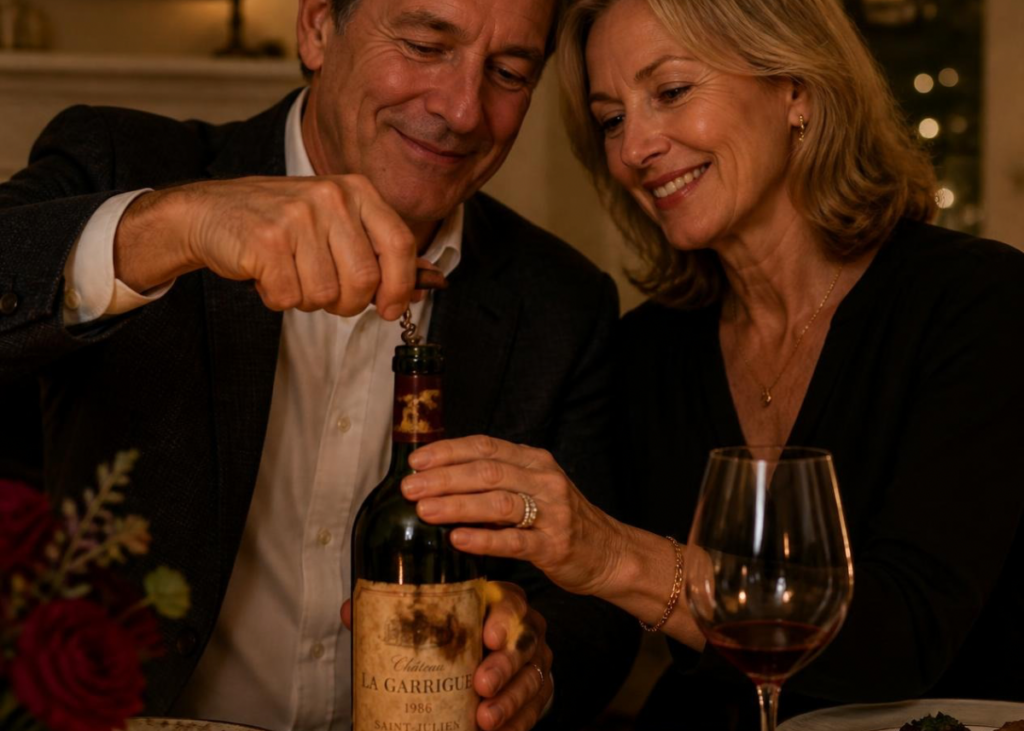
Opening an old bottle feels meaningful because you are meeting it at one particular moment in its life.
Marriage may be closer to wine than to diamonds.
The good ones do not remain perfect and unchanged forever. They age. They gather stories. Some edges soften. Others become part of the character you would miss if they disappeared.
That is why I am giving my friends a magnum of Arca Yaco Finca El Monte. One that I had been saving dearly.
I am giving them something to open later and discover what the years have done to it.
And this week, we are putting that same idea in the glass.
We are bringing several vintages of Tacana Reserva together.
Same vineyard. Same project. Different years.
You can taste what stayed, what changed, and what time brought forward.
A diamond may be forever.
Wine gets a life.
To exploration,
Diego
The Wine Explorer
P.S. Thank you for all the book recommendations last week. You gave me plenty to add to my reading list.
This week, tell me which Bonner Private Wines bottles you would like us to bring back, or which producers you hope we continue following as their wines evolve. Your replies help shape what we search for next.