
La Ciotat, France
We chose La Ciotat because it was close to Cassis.
A few days later, that logic had reversed.
Cassis was the destination. It already existed in our heads as a postcard: the harbor, the cliffs and the vineyards.
La Ciotat was where we happened to be staying.
When we drove to Cassis, we arrived in the middle of the heat and spent too long looking for somewhere to park.
We passed the harbor. We passed people who had found parking. We passed the same corner again.
The town was beautiful, but much of that beauty came to us through the windshield, with the air-conditioning doing its best and the baby in the back becoming less impressed by the minute.
Eventually, we left the car at the city casino parking lot and walked back toward the water.
More importantly, we found lunch.
Cold bottles of rosé appeared on the tables, pale and sweating in the heat. I ordered a 500 ml bottle.
I do not often see that format. It sits somewhere between a glass and a full commitment, which made me curious.
So at least some curiosity had survived the parking ordeal.
Only later did I learn that most of the wine produced in Cassis is white, built largely around Marsanne and Clairette.
I had visited one of Provence’s great white-wine towns and directed all my curiosity toward the size of the rosé bottle.
This seemed consistent with the rest of our afternoon.
There was nothing wrong with the rosé. It suited the heat, the harbor and the fish.
But I had let the image of Provence do the ordering for me.
Rosé owns the postcard.
It does not own the place.
We had made the same mistake with the towns.
A waiter told us it was like this all along the coast. The famous places were packed. Parking was scarce. We could spend the rest of the trip driving from one beautiful destination to another, searching for somewhere to leave the car.
Our sightseeing itinerary had become a parking strategy.
So we stopped trying to win at tourism.
We returned to La Ciotat and began walking without much of a plan. We stopped measuring the day by how many places we had managed to see.
That was when it clicked.
Cassis was the place we had intended to visit.
La Ciotat was the place we had actually wanted to find.
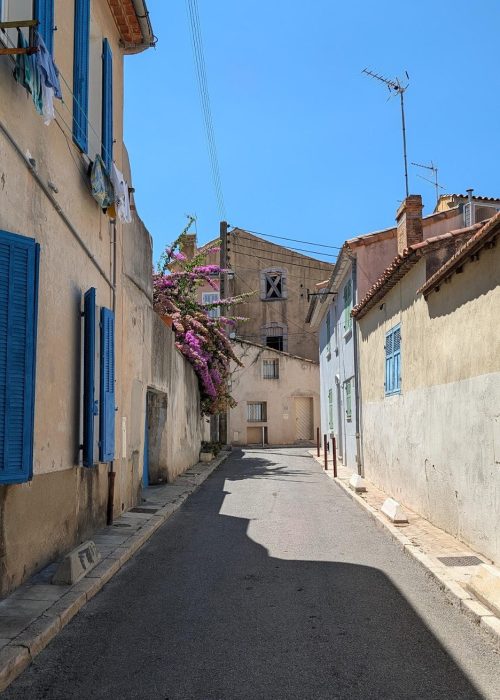
La Ciotat stops posing.
It is less polished than Cassis and a little beaten up around the edges. Behind the harbor rise the shipyards, where enormous yachts come to be repaired and refitted.
From across the water, those yachts look like wealth.
Wrapped in scaffolding, with crews climbing around them, they look like work.
I liked that.
This is the Mediterranean with a job.
A working port also creates an appetite.
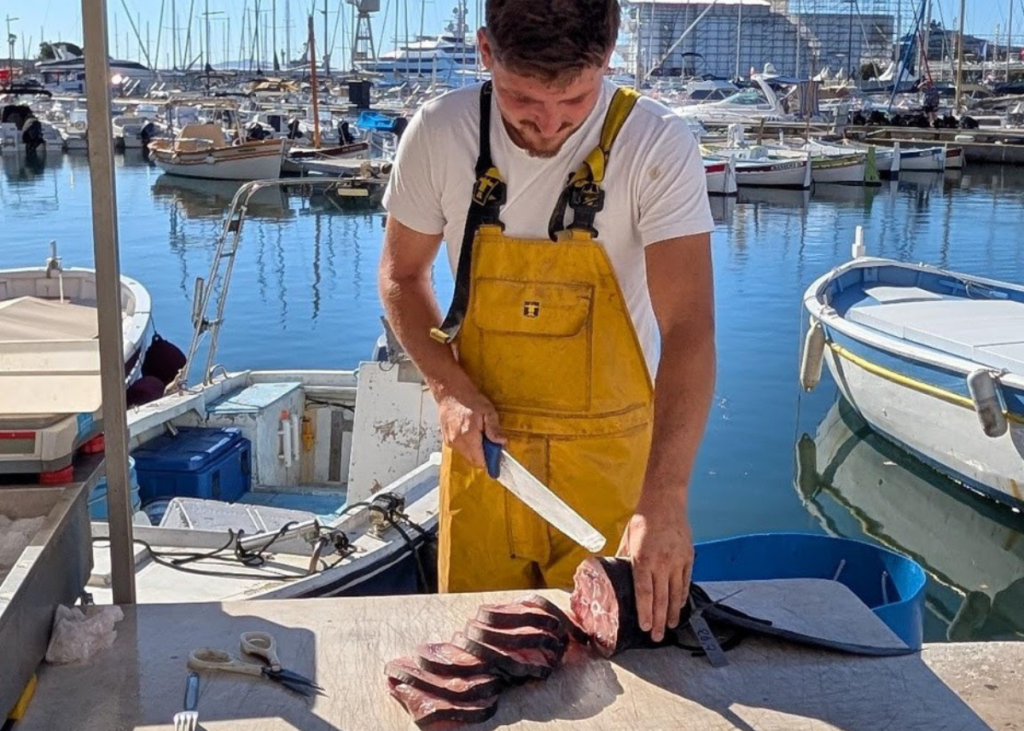
We began going down to the harbor to buy fresh fish for lunch. One morning, a fisherman placed a swordfish on the cutting table and sliced it into steaks in front of us.
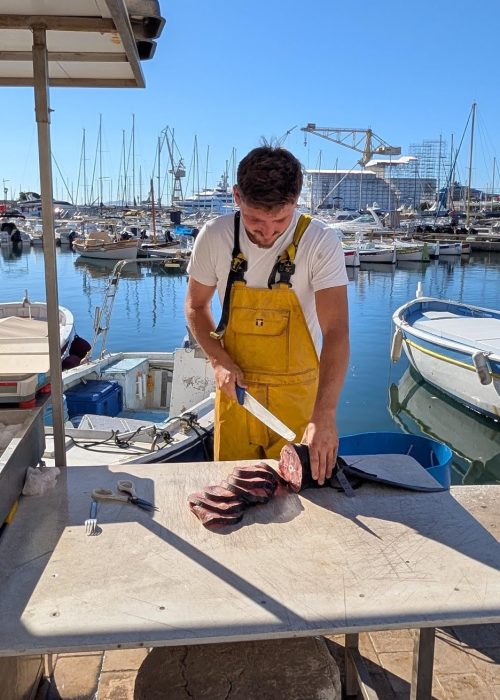
There was no menu and not much discussion.
We pointed. He cut. That became lunch.
One street back from the harbor, there is Greek and Lebanese food. A family-run Italian restaurant makes Neapolitan pizza but offers no delivery and no takeaway.
If you want the pizza, come inside and sit down.
Fair enough.
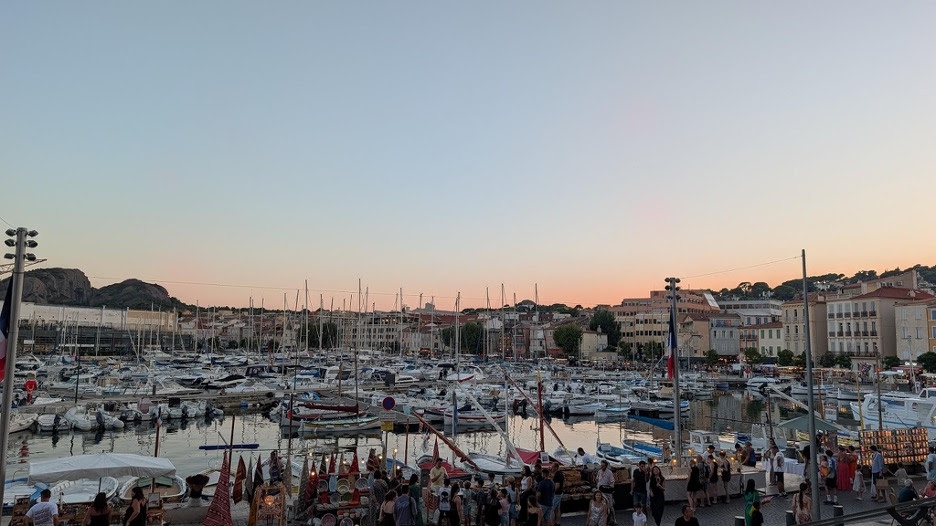
At night, the market pulls everyone toward the water. Yacht crews mix with local families and visitors. Expensive handbags pass supermarket totes.
People behave as though September is somebody else’s problem.
In the morning, the town resets.
We returned to the same coffee shop often enough to recognize the regulars. We did not know their names. We knew who arrived first, who sat where and who stayed only long enough for an espresso and a few words.
That is not enough to make you a local.
It is enough to stop feeling entirely like a visitor.
We still went out. We visited Marseille and drove more of the coast.
We simply stopped demanding that every day become a story.
We returned to the same café. We bought fish at the port. We opened whatever wine made sense beside it.
Guides are useful. I read them too. But a guide can send you to Cassis. It cannot make you notice La Ciotat.
At some point, you have to stop collecting places and give one of them enough time to surprise you.
What the Place Has to Say
Wine asks for the same patience.
We arrive with famous names and expectations already in place. Provence means rosé. The bottle we recognize must be the bottle worth ordering.
Sometimes it is.
Sometimes the place has something else to say.
In Cassis, order the white. Drink the rosé too. I certainly did.
You can plan the route. You can choose the wine. But life still has to be lived, and life has never shown much respect for an itinerary.
I would return to Cassis. One crowded afternoon is not a verdict on a town.
Next time, I will order the white.
But the rosé was not the mistake.
The mistake was thinking we knew what we were looking for.
Diego Samper
Wine Explorer