
Why Imperfect Wine Is More Interesting
Ever look at a wine label and feel like you need a translator? Critics throw around numbers — 90, 96, 97 — as if they tell the whole story. But the truth is simpler: every wine has a crack.
Wine, like life, is not about chasing perfection. It is about exploring, trying something new, and sometimes getting it wrong. That is often where the real pleasure begins.
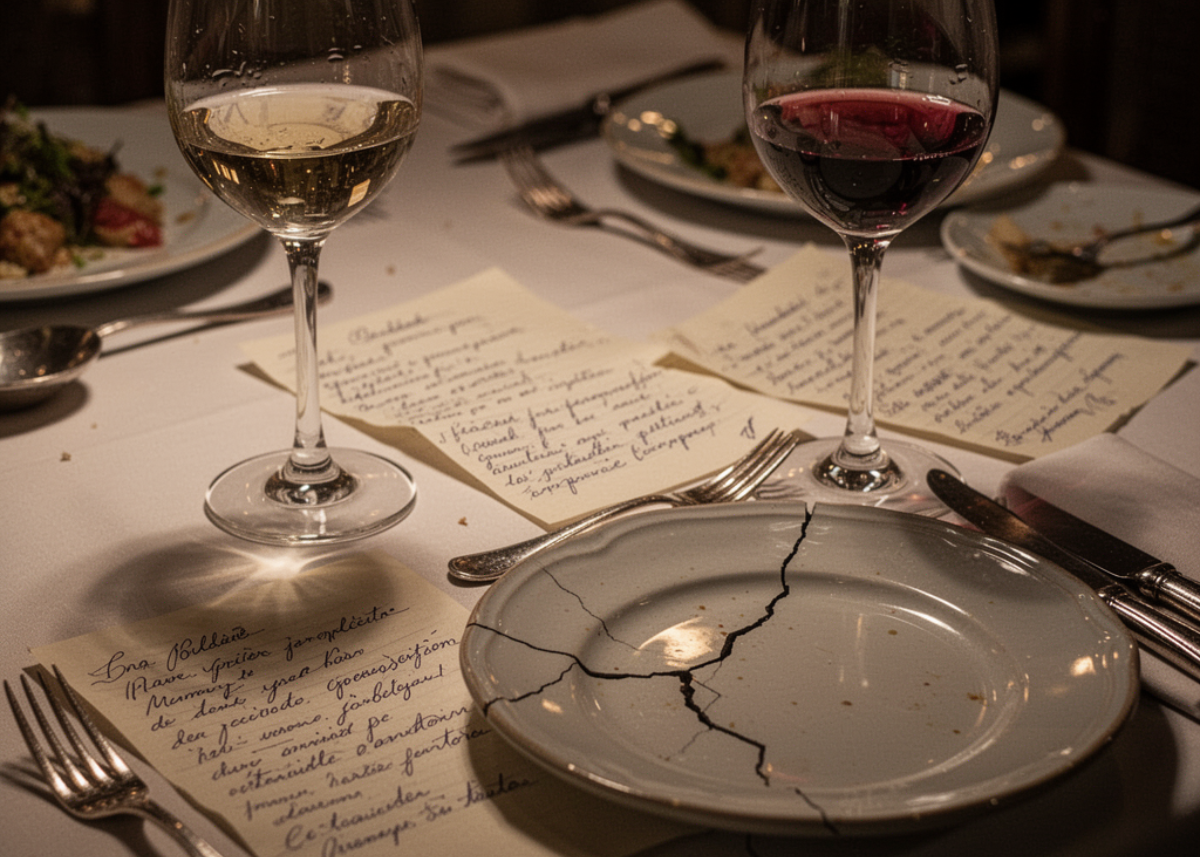
There is a modern philosopher, Slavoj Žižek, who often talks about imperfections — the cracks in reality where unexpected truth appears.
Those cracks are the moments when things do not fit neatly into place, and that is often where depth, meaning, and character emerge.
Wine works the same way.
The small imperfections — or simply the nuances that do not match what critics expect — are often what make a bottle memorable.
They are what give a wine personality.
Why Imperfection Matters in Wine
Critics may reward technical perfection, but that does not always match what you enjoy most.
A wine can surprise you by stepping outside the expected style of its region.
For example
Gigondas is expected to be bold and powerful
Beaujolais is expected to be light and fruity
Chinon is expected to be elegant and structured
Bordeaux is expected to be structured and complex
Yet sometimes:
A Bordeaux is softer and more approachable
A Gigondas shows unexpected subtlety
Those differences — those small cracks in tradition — are often where a wine becomes truly interesting.
Why Scores Are Only Part of the Story
A 92-point wine may give you more pleasure than a famous 98-point bottle simply because of when and where you drank it.
A bottle can become unforgettable because:
It reminds you of a summer evening
It fits a Sunday meal perfectly
It becomes linked to a conversation, a place, or a memory
That matters more than any score.
How We Choose Wines
When we build a collection, the goal is not to chase ratings.
We aim to offer:
A snapshot of a region
Contrast between styles
Wines with personality
Bottles that help you discover your own preferences
If a wine later receives a high score, that is welcome — but it is not the reason it was chosen.
Some Wines Will Surprise You
Not every bottle will immediately make sense.
Some may leave you uncertain.
That is part of the experience.
Wine is:
Messy
Unpredictable
Personal
More interesting than numbers suggest
Sometimes the bottle that seems unusual becomes the one you remember most.
A Simple Habit Worth Trying
You do not need formal tasting notes.
But when a bottle genuinely stands out, write down a few words.
Not because you must — because it is enjoyable.
Over time, you begin to notice patterns:
What you naturally enjoy
What styles return again and again
Which wines stay with you
That matters far more than following someone else’s score.
A Cheat Sheet to the Critics’ Cracks
Even the most respected critics have their own preferences.
Robert Parker
Favors powerful, concentrated wines
Often rewards bold, fruit-forward styles
Wine Spectator
Focuses on balance and typicity
Strong for consistency in classic styles
Jancis Robinson
Uses a 20-point scale
Emphasizes balance, restraint, and elegance
James Suckling
Prefers vibrancy and immediate appeal
Often rewards freshness and accessibility
Antonio Galloni
Focuses deeply on structure and terroir
Especially useful for wines with aging potential
None are right or wrong.
The key is learning which critic’s preferences align most closely with your own.
The Wines Worth Remembering
Wine is not about perfection.
It is about opening a bottle that says something to you.
Maybe it brings back a forgotten memory.
Maybe it challenges what you thought you knew.
Maybe it is simply different enough to make you stop and notice.
Those are the bottles worth remembering.
And that is exactly what we aim to offer — wines that tell a story and help you discover what you genuinely love.
Cheers,
Diego