
A Report From Wine Explorer Diego Samper
Tourrettes-sur-Loup, France
We went to Le Pradet for the wine.
It is a small Mediterranean town just east of Toulon, between the sea and the hills. Clos Cibonne was there, and I wanted to see the place behind one of Provence’s most unconventional rosés.
Lunch was supposed to be the easy part.
We had spent two weeks following what I had begun calling our Grace Kelly route across the South of France.
Blue water. Fishing boats. Little towns turning gold at the end of the day. Pale rosé sweating in an ice bucket. The version of summer that always appears ready for its close-up.
At first, you surrender happily.
Then you stop seeing only summer.
You begin wondering what remains after it leaves.
Every vacation also leaves you with advice.
A beach nobody else knows. Or at least you like to think nobody else knows. The dish everyone must order. Some little discovery you begin presenting as though it might change the course of modern travel.
Ours was less groundbreaking.
We had started checking whether restaurants stayed open in winter.
It never decided lunch. It simply counted in a place’s favor.
The meals had not been bad. They had simply begun to look alike.
The sea view. The linen shirts. The pale rosé. Too many good things carefully arranged on the same plate.
Then the waiter appears.
He has barely begun lowering the food when the phones come up.
En garde.
Prêts?
Allez!
Everyone lunges while the waiter’s hand is still in the frame.
Phones cross over the fish. People lean around the flowers. Nobody touches anything until the plate has been photographed from every available angle.
And yes, sometimes we are doing it too.
Restaurants notice what people photograph. Wineries notice what people order. Soon every table has the same chairs, every plate has the same flowers and every Provençal rosé is one shade paler than the last.
Rosé has become so closely associated with summer that ordering anything else can feel like missing the point.
But summer is not a color.
A light Pinot Noir, served cool, can belong at the same table.
Nothing is necessarily bad.
It simply becomes harder to remember where you are.
What Remains After Summer
Opening in winter does not prove a restaurant is good. It tells us that the place has to persuade the same people to return.
In February, the beach is empty and the tourists are gone. The customers know what the fish should cost and whether the chef has started taking shortcuts.
A seasonal restaurant can earn that trust too. Perhaps you simply need to arrive later.
In June, the cooks may still be learning one another’s movements and the waiter is memorizing the table numbers.
By August, the team has become a team. A few unnecessary things have disappeared. The restaurant stops performing summer and starts cooking.
People who return to the same town every year understand this.
On the first vacation, everything is new. Come back and you know which bakery deserves the morning walk, which beach is worth the trouble of parking and which restaurant gets a hard pass, no matter how good the view looks online.
Familiarity does not have to make travel boring.
Sometimes it is how a place starts becoming yours.
In Le Pradet, we found a seafood restaurant away from the beach.
There was no sea view to help with the bill. It stayed open all year and served people who looked as though they had been there before.
The kitchen had rhythm.
It had done this yesterday.
It would do it again tomorrow.
That week, Irene was reading Haruki Murakami’s Sputnik Sweetheart. She stopped to show me a line that points back to Pushkin:
“He had no itch to dig for glories
Deep in the dirt that time has laid.”
The line stayed with me because, at Clos Cibonne, someone had done precisely that.
André Roux had the itch.
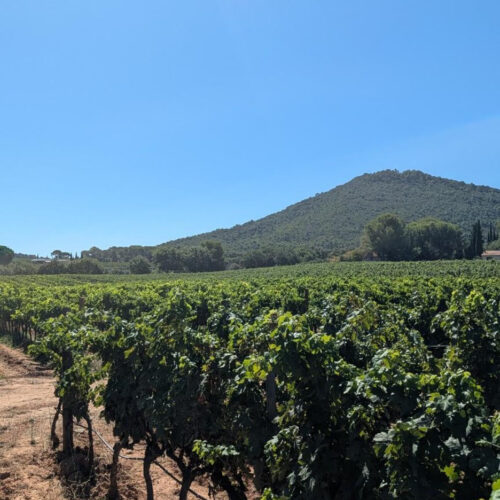
When he took over the property in 1930, Tibouren was disappearing from Provence.
There were sensible reasons to leave it behind.
Tibouren gets sick easily, particularly from the fungal diseases powdery and downy mildew, and its berries do not always mature evenly.
It demands attention.
Roux planted it anyway.
Clos Cibonne sits close to the Mediterranean, where the coastal conditions give the grape a better chance than it has elsewhere.
Tibouren was difficult.
But it was difficult in the right place.
The Second Bottle
Roux also treated rosé as a wine worth waiting for. He aged it in enormous old wooden casks, giving it color, texture and time to become something more than a cold drink for a hot afternoon.
Then Provence found its formula.
Make rosé pale. Put it in clear glass. Serve it cold.
Sell summer.
It was a very good formula. People liked it, so producers gave them more.
Clos Cibonne stood apart.
The family kept Tibouren.
They kept the dark bottle.
They kept the casks.
Not because they opposed progress. Later generations replanted the vineyards and modernized the cellar.
They changed plenty.
They simply knew what not to change.
When we visited, there was no grand performance.
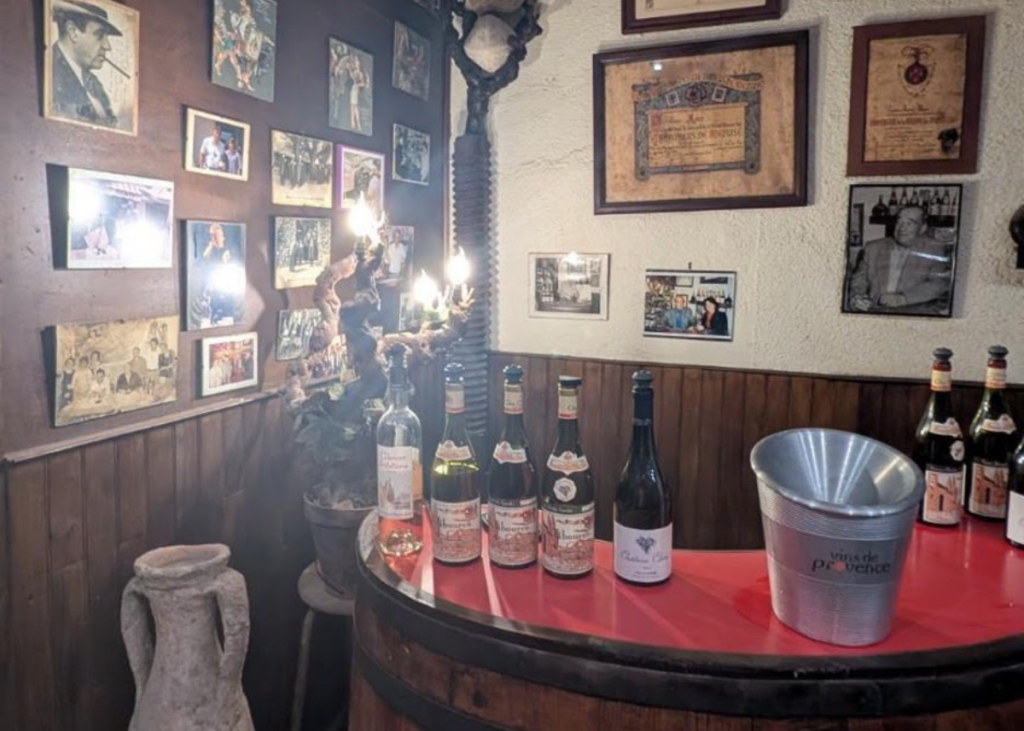
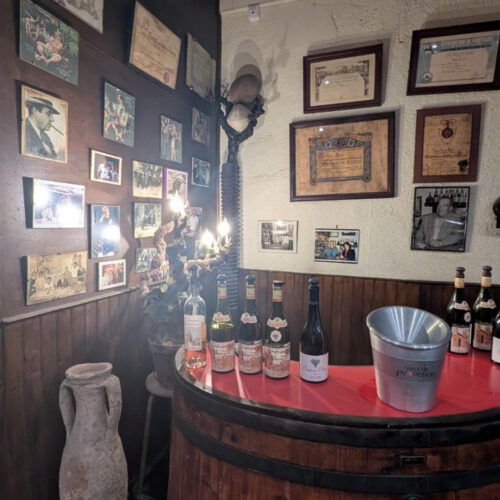
We tasted in the old cellar. Photographs from different decades covered the walls, and the same corner kept appearing in them.
Different faces. Same room.
It did not feel preserved for visitors.
They were still pouring wine there.
Continuity is easy to overlook in wine because the first bottle gets most of the attention.
A beautiful label, a recommendation or a good story can persuade us to buy it. Sometimes we open it on impulse.
The second bottle is different.
We open that one because we remember the first. It worked with dinner. Someone asked for another glass. Weeks later, we found ourselves thinking about it again.
The first bottle may be curiosity.
The second means the wine earned its return.
I still want the unfamiliar bottle. That is half the fun.
But I also want to know which one I will look for again when summer is over.
Diego Samper
Wine Explorer