
Dear Member,
As they say in France, “a great wine comes not from the soil, but from the man who made it.”
In the French view, it is not enough to carry a label like Lafite or Petrus. It is not enough to be among the few granted a Left Bank Bordeaux classification. Winemaking is, first and foremost, a test of character.
But what does character look like in a wine?
After tasting the six bottles in this carefully curated collection, you’ll see that it looks like a man willing to walk away from the hyper-stylized French wines so prized in China and the United States, in order to return to something older, simpler, and far more authentic.
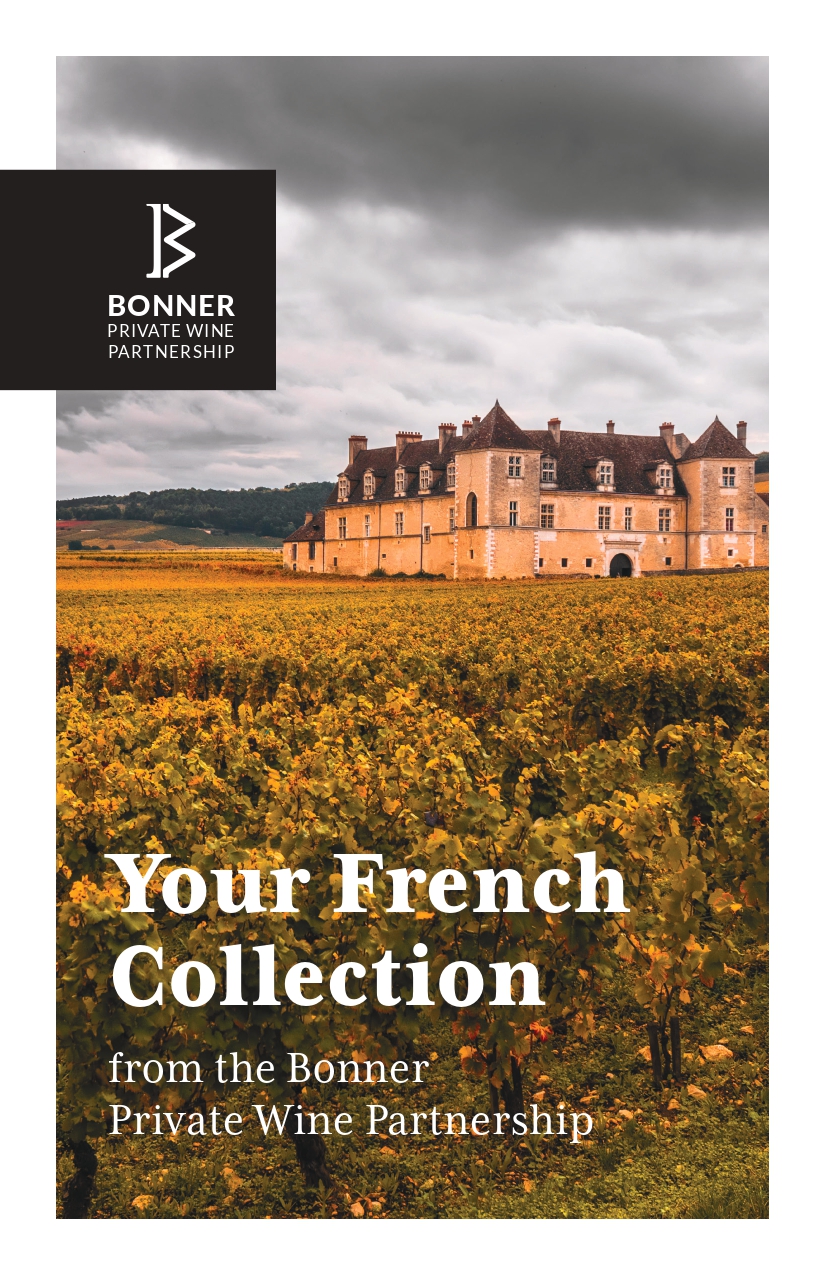
It looks like vineyards planted on misty slopes strewn with razor-sharp schist, in regions so remote that the TGV—the French high-speed train—doesn’t even pass nearby.
It looks like an old stone semaphore tower on a hill in Châteauneuf-du-Pape, where one of France’s most legendary winemaking families chose to risk a century-old reputation on a difficult vintage, producing a very special wine: no filtration, hand-harvested grapes, traditional fermentation.
They won that bet handily, earning high praise from critics such as James Suckling (96 points) and Robert Parker (91 points).
French wine has become synonymous with words like big, extravagant, and perfect. What else can a true Frenchman do but turn his nose up at the clichés?
Out with the chemists, the enologists, and the marketing mavens.
In with the old ways, the old vines, and the wisdom of the ancients.
The Old Way
In his book on traveling through France, importer Kermit Lynch describes traditional winemaking like this:
The taste of the grape told them when to harvest.
The taste of the wine told them when to bottle, what kind of oak to use, the proper barrel size, and how to prune different grape varieties.
If the taste of the wine revealed that a steep, stony parcel produced better results, that was the land they worked—regardless of the labor involved.
If public taste changed, they did not rip out their Pineau vines to plant Chardonnay.
They were instinctively guided toward quality. Only in the modern era has the hard-earned knowledge of the ancients been discarded, almost overnight, in the name of progress.
Perhaps the ultimate act of rebellion is not tearing down tradition, but restoring it to its rightful place.
In This Box
You will find six bottles:
Château Rozier Grand Cru Saint-Émilion (Bordeaux) 2016
Maison Ventenac L’Intrus Cabardès 2016
Télégramme Châteauneuf-du-Pape 2016
Domaine Ollier-Taillefer Les Collines Rosé, Faugères 2018
Domaine Anita Moulin-à-Vent Cœur de Vigneronne, Chénas (Beaujolais) 2018
Champagne Moutard Brut NV
Some of these wines are low in sulfites and alcohol, simply because of where they are made. Others are heavier and bolder. Some will drink easily. Others will challenge you.
Our advice is simple: let each bottle speak on its own terms. Each has a character all its own.
To your health,
Will Bonner
Founder, Bonner Private Wine Partnership