
Dear Fellow Wine Enthusiasts,
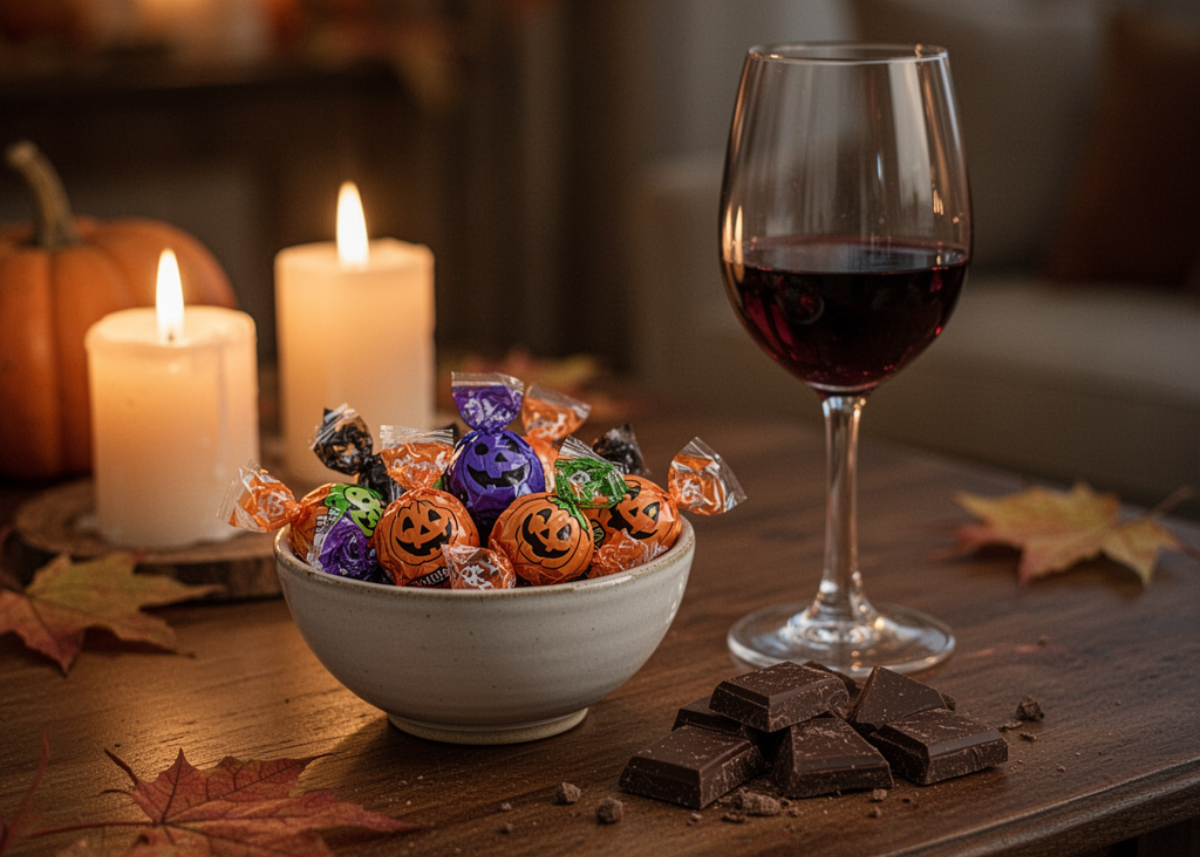
With Halloween just around the corner, candy seems to be the talk of the town. I can remember Halloween being that time of year when candy rules didn’t apply—there were no limits. It was all about how much we could gather (and eat), comparing our bulging bags with friends and making high-stakes trades. 🎃🍬
These days, I find myself leaning more toward sip and savor. Wine has become my adult candy—a tasty treasure that needs to be enjoyed in the right amounts to truly appreciate it. But there’s a very strict rule when it comes to candy and wine.
So if you’re like me and waiting for the kids to show up with a glass in hand, don’t mix them. Leave the candy to the kids. Don’t get tempted—I know it might be hard. But don’t take the candy from the kids!
Why Candy and Wine Clash
There’s an interesting reason why that fun-size Reese’s doesn’t pair well with your Cabernet.
You may have noticed that when you enjoy a piece of candy and then take a sip of wine, that well-balanced Merlot suddenly tastes as off as orange juice after brushing your teeth. What happened?
It all comes down to how sugar affects our taste buds.
Sweetness coats your tongue
It mutes receptors that detect subtle flavors
Wine can suddenly taste sour or bitter
It’s like trying to appreciate a beautiful sunset through a foggy window—you miss the intricate details that make it special.
Moreover, the acidity in wine can amplify the sweetness of candy, creating a flavor clash where neither the candy nor the wine shines.
Dry Wines vs Tannic Wines
While we’re on the topic, let’s clear up a common misconception: dry wines and tannic wines are not the same thing.
What Is a Dry Wine?
A dry wine simply means that most of the sugar has been converted to alcohol during fermentation.
The wines you receive from our club are typically dry, allowing the true character of the grape to come forward.
What Are Tannins?
Tannins are natural compounds found in:
Grape skins
Seeds
Stems
They create that drying, puckering sensation you may notice—similar to sipping a strong cup of tea.
A Simple Tasting Experiment
Here’s a little experiment to try next time you taste wine:
Taste the wine while gently pinching your nose.
It may seem unconventional, but it helps distinguish between:
Actual sweetness (from residual sugar)
Perceived sweetness (from fruity aromas)
You may be surprised by the nuances you discover. 🍷
What About Chocolate and Wine?
Now, you might be thinking: What about chocolate and wine? Isn’t that a classic pairing?
You’d be absolutely right.
Chocolate—especially dark chocolate—is not your everyday candy.
It is:
Complex
Slightly bitter
Rich
That makes it capable of complementing certain wines beautifully.
How to Pair Chocolate with Wine
When pairing wine with dark chocolate, it’s generally best to choose:
A sweet wine with low tannins
Or a fruity wine with soft tannins
This balances the bitterness and astringency of cocoa.
A dry, highly tannic wine is usually less successful.
Suggested Pairing
70% dark chocolate
Malbec
The way rich chocolate and robust wine interact on the palate can be extraordinary.
A Better Halloween Treat
As the little ghosts and goblins make their rounds in search of sweet treasures, why not treat yourself to something more refined?
Dessert is always served at the end for a reason.
So if you decide to have candy, enjoy it after you’ve savored your wine—or better yet, let the wine be your treat. 👻🍷
Join the Conversation
Do you ever pair wine with sweets?
Do you have a favorite combination that elevates the experience—perhaps Pinot Noir with dark chocolate?
I’d love to hear your thoughts.
Please feel free to share your wine stories and discoveries. Let’s keep the conversation flowing, much like a good vintage.
Warm regards,
Diego