Five parajes
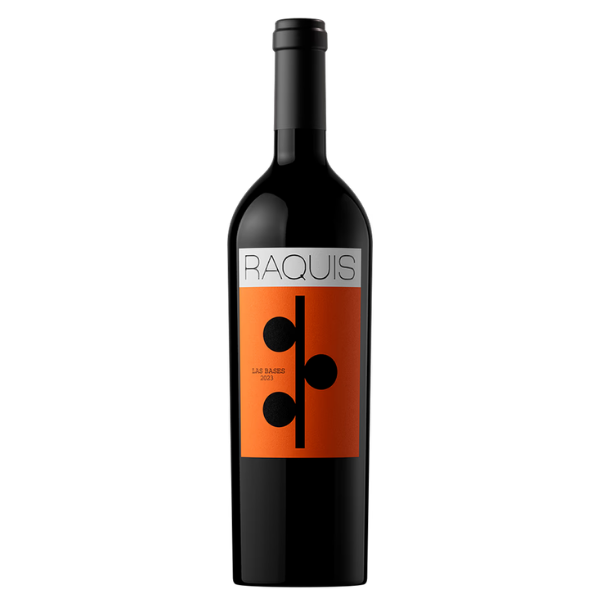
Las Bases
1,100–1,450 m · 86% Malbec
The foundation cuvée, drawn from every site at once.
$48

Thirteen hectares, twenty-two micro-parcels, and a conviction that soil profiles can change drastically within just a few meters. Raquis makes the wines alike on purpose, so what is left in the glass is the difference between the places.
Gualtallary · San Pablo · Chacayes · Altamira · Las Compuertas
The project
We’re moved by sharing something genuine. Something that feels good, that inspires. Raquis is our way of being in the world: with respect, beauty, and depth.
Raquis was established in 2021 by three partners with a long-shared history in premium Argentine wine. More than a business project, it grew out of a friendship and years of working together, which turned into a common vision of Argentine viticulture defined by place rather than varietal, by appellations rather than labels, and by the careful work of vignerons rather than large-scale winery structures.
The winery was born with the mission of reflecting a landscape. The project strives for absolute transparency in its wines, so they reflect their place of origin with clarity. From hundreds of vineyards they selected just thirteen hectares, divided into twenty-two micro-parcels across eleven associated growers. In most cases these are particular portions of rows, segmented for their own potential. Today the wines are in more than fifteen international markets.
We cultivate with respect, caring for the natural balance of the environment. For us, viticulture is a way of preserving what truly matters.
We pursue honest, precise wines, free from artifice. Allowing the place to express itself clearly is at the heart of how we work.
We value connection over scale: a small project, thoughtfully created to accompany those who choose it.
The founders
All three came from Viña Cobos. Between them they ran the winemaking, the vineyards and the company. They left to farm thirteen hectares. Raquis was born from the shared dream of three friends who had spent years exploring the vineyards of the Andes together; what began as conversations about place became a small and deliberate project.
A sixth-generation Mendoza viticulturist and former winemaker at Viña Cobos, recognised for his understanding of the Andes terroirs and a precise, site-driven approach. More than thirty harvests across both hemispheres, and he still advises selected European projects. His work focuses on revealing the identity of each vineyard through careful viticulture and minimal intervention in the cellar.
Descendant of Mendoza farmers and former Vineyard Director at Viña Cobos, he provides the viticultural backbone. Fifteen years consulting on vineyard management and new plantings across the United States, Europe and Argentina, from the high-altitude landscapes of Jujuy to the windswept terroirs of Patagonia. He specialises in mountain estates, where steep slopes demand a balance between technical precision and respect for the ecosystem. At Raquis his focus is that the fruit remains the true protagonist.
An industrial engineer with more than twenty years leading premium wine ventures in Argentina and internationally. At Viña Cobos he served as President and CEO, led the group’s U.S. importing business and contributed to its European projects. He later served as Director of Wineries at Molinos Río de la Plata, overseeing Cobos, Nieto Senetiner, Cadus and Ruca Malen.
The ground
Mendoza is a landscape forged by nature on its most monumental scale.
The Andes, home to the highest peak in the Americas, do not only shape the scenery. The rivers and streams descending from the glaciers have, over millennia, created soils of remarkable complexity: stony, well-drained, and enriched with high levels of calcium carbonate — limestone. The result is a true geological mosaic, where soil profiles can change drastically within just a few meters.
Meltwater is a scarce resource here, to be conserved and used with precision. The climate is predominantly dry and warm, and finds its freshness at altitude: in the Uco Valley, summers are cooler and the nights very cold, which allows a long ripening cycle and forges the elegance, balance and freshness that define modern Argentine viticulture.
“Uco Valley” is the name on the map, and it is too big a name to mean much. Inside it are parajes: smaller places, each with its own soil and altitude. The labels narrate them.
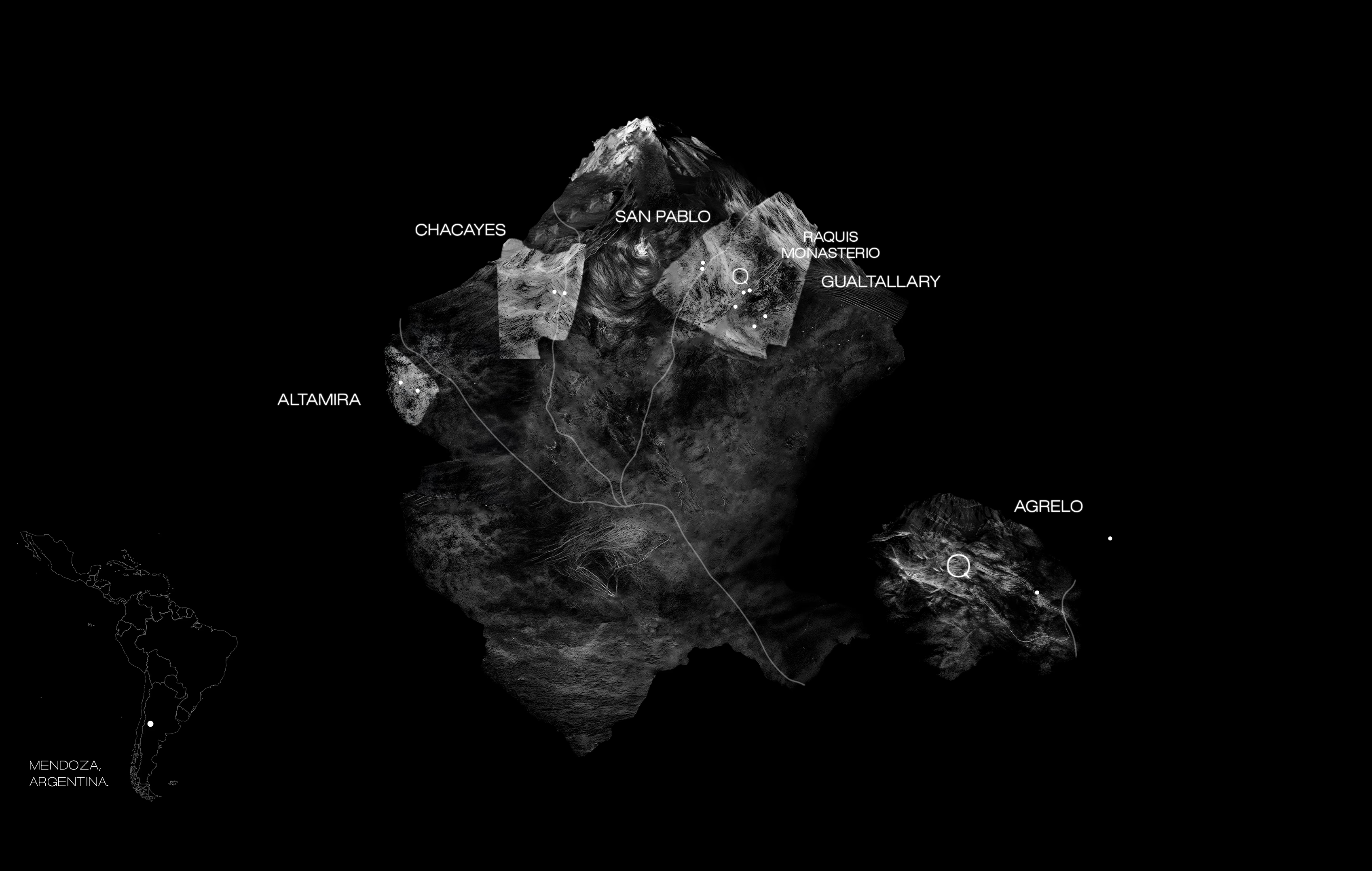
Thirteen hectares, scattered · Uco Valley and Luján de Cuyo · Hover to magnify
Soil profiles as described by the winery
The method
Only exhaustive knowledge of place leads to excellence.
So the decoding begins with the ecosystem itself: surveys of the native species, to understand how they interact with soil, microclimate and hydrology. Working with the ecosystem, not against it. Then high-resolution sensors and drones map thermal variation, frost and heat accumulation, slope and solar exposure. Then hydrological studies, and more than ten soil pits per hectare to characterise the profiles.
All of it converges on Domains — homogeneous sectors — within which the micro-parcels are drawn, so each block receives exactly the care its terroir demands. Key work in the vineyard, pruning, thinning and harvest, is done by Raquis’ own team, following a philosophy of organic and regenerative practices and a biodynamic calendar.
For them, managing a vineyard means being guardians of an ecosystem, not just grape growers: preserving the natural environment that existed before the vineyard, protecting the native flora and fauna. They are convinced the actual value of the wine lies in the transparency of the terroir, so every action in the vineyard is designed to highlight that essence with the utmost purity.
In the cellar: open fermentations, often with whole clusters and their stems. Italian ceramic and clayver, French barrels, Austrian foudres. Twenty months, give or take. Then nothing — every wine here is bottled without fining and without filtration. Expect a little sediment: stand the bottle up for a day and pour gently at the end.
Raquis, in their own words
The collection · 2023
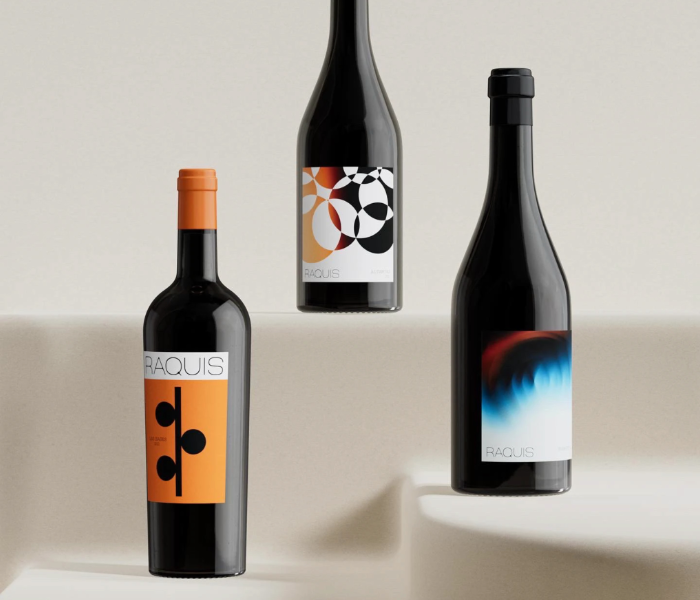
The three Parajes wear the same label on purpose. Only the place changes, so that is what the names below lead with. Take one to see what they do, or take the set and taste them against each other.
Five parajes
1,100–1,450 m · 86% Malbec
The foundation cuvée, drawn from every site at once.
$48
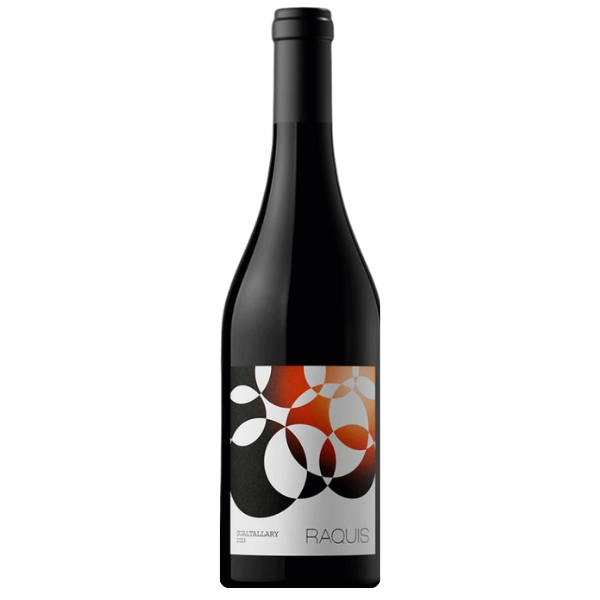
Gualtallary · Tupungato
1,350–1,500 m · 89% Malbec
The highest ground here, built from six micro-vinifications.
$77
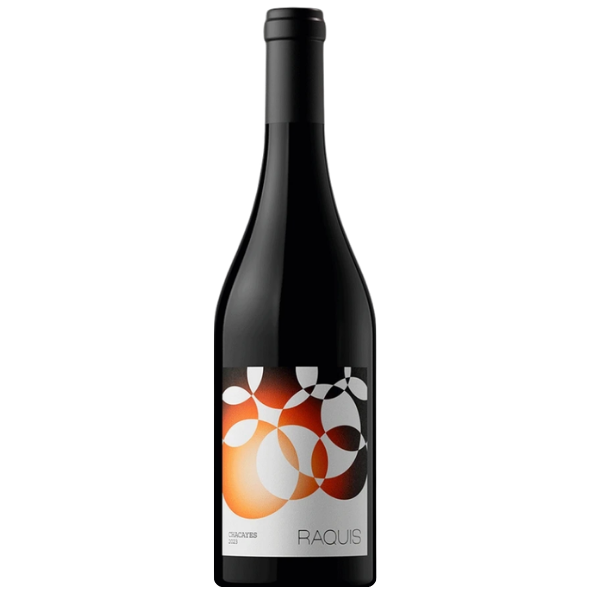
Chacayes · Tunuyán
1,350 m · 85% Malbec
Six micro-parcels bordering native foothill vegetation, absorbing the aromas of the mountains.
$77
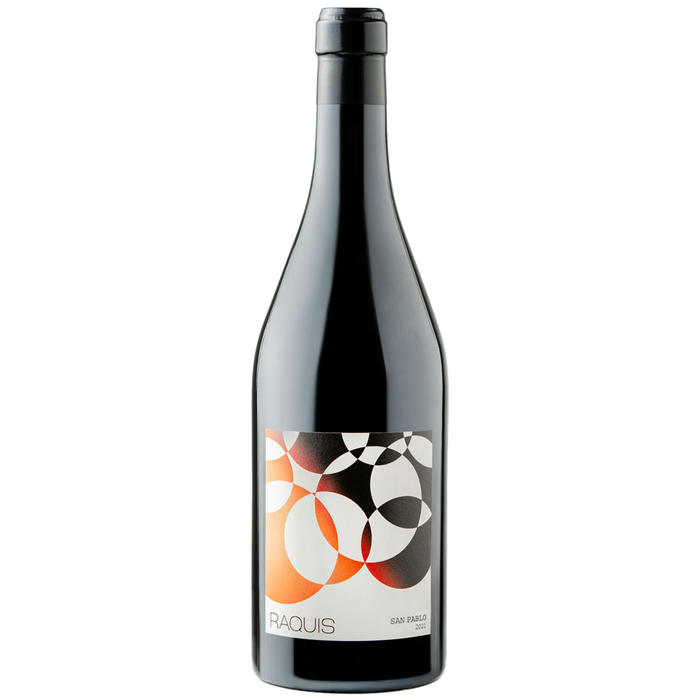
San Pablo · Tunuyán
1,400 m · 97% Cabernet Franc
The coolest, wettest site, and the one wine led by Cabernet Franc.
$77
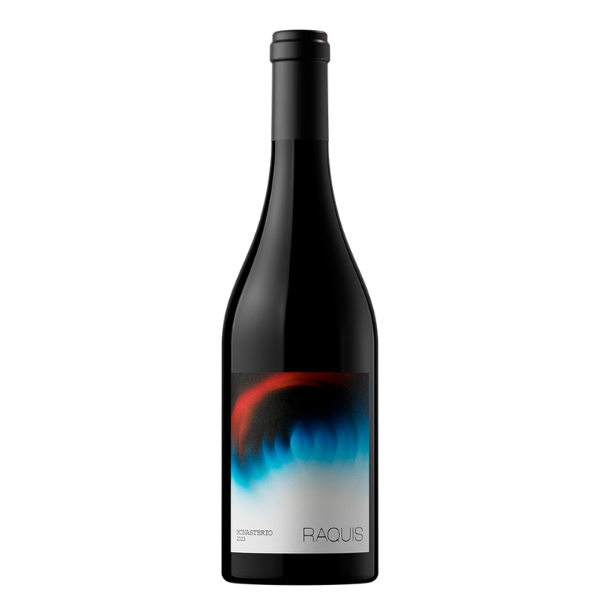
Monasterio · Gualtallary, Tupungato
1,450 m · Malbec · 970 bottles made
Monasterio is the laboratory, and the ultimate expression of the philosophy — the place where their conservation viticulture reaches its most advanced point. Here they broke the paradigm of invasive monoculture: the vineyard was planted without clearing the native flora and without disturbing the soil. That protects not only the flora and fauna, but the soil’s original structure, its microbiological vitality and its water. In the cellar: no whole clusters, open fermenters, and an infusion technique with the cap worked by hand, decided day by day by tasting. The rest of the range shows you the valley. This one narrows to a single piece of it.
$300
| Wine | Place | Altitude | Blend | Ageing | Alc / pH | Made |
|---|---|---|---|---|---|---|
| Las Bases | Five parajes + Las Compuertas | 1,100–1,450 m | 86% Malbec, 11% Cab Franc, 2% Merlot, 1% Cab Sauv | 20 months. French oak, Italian ceramic, Austrian foudre | 14.4% · 3.63 | 25,000 bottles |
| Gualtallary | Tupungato | 1,350–1,500 m | 89% Malbec, 11% Cab Franc | 30% Italian ceramic, rest French oak 225–500 L | 14.4% · 3.47 | 2,516 bottles |
| Chacayes | Tunuyán | 1,350 m | 85% Malbec, 15% Cab Franc | 20 months. Clayver 15%, French barrels, Austrian foudre | 14.1% · 3.49 | 2,330 bottles |
| San Pablo | Tunuyán | 1,400 m | 97% Cabernet Franc, 3% Malbec | 20+ months. One French foudre, one clayver | 13.9% · 3.47 | 2,513 bottles |
| Monasterio | Gualtallary, Tupungato | 1,450 m | Malbec | 20+ months. One 600 L clayver, one 225 L French barrel | 14.5% · 3.40 | 970 bottles |
All five bottled without fining or filtration · figures as published by the winery
Your order
Thirteen hectares only makes so much wine. Add what you want, then carry on to checkout.
Your selection
No wines selected yet.
Raquis · Uco Valley
“To make wines that withstand the passage of time and tell a true story, we must build the purest and most respectful relationship with the land. The conservation of place is not a technique but the non-negotiable foundation of our identity.”
Raquis, in their own words